Upload BOM & Gerber


IPC standards are consensus documents that cover many areas of electronics design, PCB fabrication, assembly, inspection, testing, rework, and training of personnel for all these processes. IPC provides a common technical language to both designers and their customers through IPC standards, but IPC standards do not create a single global compliance certification standard. An acceptable requirement contains the following elements: identification of the item or activity being performed; document number and revision; class of the product or activity; any exceptions to the requirement based on the specific project; precedence of the requirement vs. all other requirements; and any documentation that establishes acceptance.
In 2025, the name of the organization changed to Global Electronics Association, although IPC will continue to appear on IPC standards, training, and certification programs (Global Electronics Association announcement).
- Before you select an IPC standard number, select the product or activity being performed.
- Find a generic IPC document that corresponds with the applicable IPC sectional, performance, process, acceptability, or test companion documents for your specific situation and combine them to arrive at an acceptable requirement.
- Each acceptable requirement must include a revision number, Product Class, applicable addenda, approved exceptions, the precedence of the requirements, and the evidence required for acceptance.
- When selecting evidence of personnel certification, organizational qualification, delivered-product compliance, and safety approval, think of these as individual types of evidence.
Contents
show
What Do IPC Standards Control?
IPC standards cover both what you are controlling and how you are controlling it. The controlled object may consist of a rigid PCB, a flexible PCB, a soldered PCBA, a wire harness, a repair operation, a test specimen, or a human credential. A document is considered a project requirement when it is invoked by a drawing, specification, PO, contract, or similar controlled document and meets all of the necessary conditions outlined in the IPC standards overview.

The type of document you choose will depend on its intended use, but its number alone may not define its role. For example, the design document will be the basis for the creation of product data. The qualification and performance specifications will define the requirements for the finished printed board. The process documents will define the materials used and the work performed during assembly. The acceptability documents will provide criteria for the inspector’s decisions. The test methods will define how a measurement is taken, while training and certification programs will provide credentials for people in the industry. While these types of documents may be combined in the same product-document chain, one cannot substitute for the role of another.
Correct document selection facilitates the development of a consistent means of communication and leads to repeatability of decisions regarding the product or activity in question; document selection does not guarantee the outcomes of production (yield, safety, reliability, field life, and cost savings). The outcome of production also depends on the released data regarding the product, materials used, process controls used during production, test plan, sampling, the environment in which the product will be used, and any evidence of conformity with standards.
Why Are IPC Standards Important?
The use of IPC terminology helps ensure that a designer, fabricator, assembler, and inspector will all interpret the same condition in a consistent manner. This will be especially important for products that have data and manufacturing transferred between companies and possibly countries. A standard provides common definitions and acceptance criteria; however, the product documentation must still identify which requirements apply.

Consistent Acceptance Decisions
Both documents, IPC-A-600 and IPC-A-610, support the inspector in making repeatable acceptance decisions by providing descriptions of visible conditions and their acceptability. They do not eliminate the need for the drawing, product-specific tolerances, electrical or functional testing, sampling plan, or authorized deviations. The standard, together with controlled inputs, supports consistent acceptance.
Clearer Supplier Requirements
A PO that simply states “IPC compliant” does not provide the necessary details for suppliers. A bounded requirement identifies the object, designation, revision, Class, agreed options, exceptions, precedence, and records required with the lot. A bounded requirement will also enable suppliers to compare quotations more easily and reduce the possibility of purchasing, engineering, suppliers, and inspectors having different acceptance standards.
Traceable Evidence
IPC requirements can be traced to a certificate of conformance, inspection results, records of electrical testing, microsection results when specified, authorized deviations, and the person authorized to accept the lot. IPC creates a point of reference; evidence requirements and procedures will be established by the project definition as the basis for acceptance and the process for review.
How IPC Standards Fit the PCB and PCBA Lifecycle
The chain of decisions includes the following:

- Design: Generic and Sectional Design Guidance helps in making layout and product-data decisions.
- Bare-board performance: The performance specification invoked determines the requirements for the fabricated PCB.
- Bare-board acceptability: An acceptability document provides support for interpreting the observable conditions.
- Assembly: The process and material requirements govern the soldered electrical and electronic assemblies.
- PCBA acceptability: The finished assembly will be evaluated against the invoked acceptance basis and associated product data.
- Rework or repair: The authorized procedure controls how to make modifications, replace components, and effect repairs.
- Verification: The accepted test methods and product limits will produce a record associated with the item.
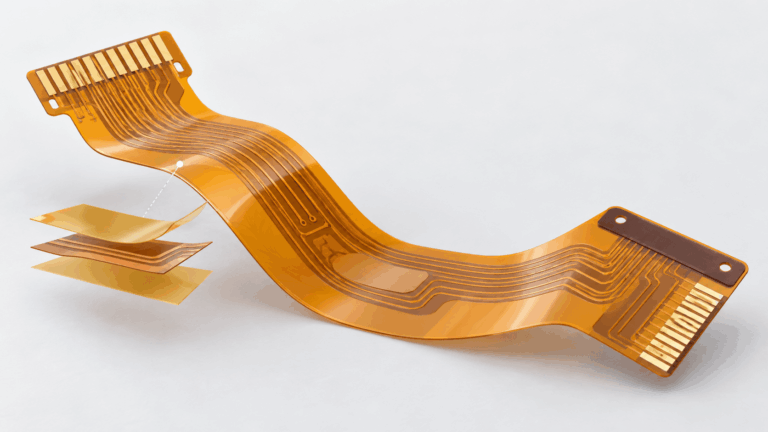
The same product-document chain may not be universally applicable to every product; some products may require different sectional documents or addenda, including flexible circuits, rigid-flex boards, cable harnesses, high-frequency designs, space products, and automotive products.
Which IPC Standards Apply to Your Product?
Choose the documents based on the type of object and decision required, rather than based on the number of a document with which the individual is most familiar.

IPC-2221 gives broad design guidance, while sectional IPC-2222 and IPC-2223 specify requirements for rigid organic boards and flexible and rigid-flex designs, respectively. Other IPC documents also exist for specific requirements such as HDI, RF electronics, or High Speed designs. To define your project fully and accurately, you will need to verify the IPC documents applicable to it. A list copied into a drawing is NOT sufficient to properly define your project. (IPC board design standards)
A rigid-flex or partially flexible board is where this family of IPC documents is most often misapplied, particularly when IPC-6012 is invoked because the majority of the circuit is rigid with a small flexible tail, resulting in the flexible portion not having its governing performance requirements evaluated. An acceptable guide to the observable condition of a bare circuit board is provided by IPC-A-600. However, this document does not supplant the requirements of the applicable performance specification or fabrication documentation for a given project. Readers who need a production overview can use the SUGA-PCBA guide to controlled bare-board manufacturing as a separate process reference.
The function of J-STD-001 and the function of IPC-A-610 are coordinated; however, the two documents serve different purposes. The focus of J-STD-001 is to provide requirements for materials, soldering processes, verification, and acceptance of soldered assemblies. The purpose of IPC-A-610 is to support assembly acceptability decisions. Neither of these documents defines all functional requirements for a finished product or replaces functional testing. (J-revision release announcement)
IPC-TM-650 is maintained by individual method; therefore, the method number, revision number, and pass/fail limit must be stated when invoking an IPC-TM-650 test method. If you cite a testing method in your documentation as simply “per IPC-TM-650,” this leaves those three important pieces of information undefined. For example, a solder-float test and a peel-strength test could both be referenced as “per IPC-TM-650,” when actually they are two distinctly different tests with differing objectives. A properly written requirement cannot simply state “per IPC-TM-650”; at a minimum, it must also include the applicable IPC-TM-650 method number, revision number, and pass/fail limit. (official revision table)
Design, Performance, Process, and Acceptability Are Different
IPC guidelines clearly state that A-610 is not intended to define assembly operating processes, nor does it authorize repair, modification, or product change. A product can visually pass but still fail to meet electrical, functional, environmental, cleanliness, or reliability requirements. A functional unit can also contain an issue that does not meet the invoked workmanship criteria. Therefore, all elements used to accept a product should consider relevant visual evidence, process evidence, testing evidence, and contractual evidence. (official standards guidance)

Understanding IPC Class 1, 2, and 3
IPC product classes are used to represent the various levels of product performance and the potential consequences of service interruption. IPC product classes do not represent tiers of marketing, certification levels of personnel, or automatically assigned labels within the industry. Users are to identify the classification of each product in their contract or PO and any associated exceptions as required (using the IPC selection checklist).
IPC Class 1: General Electronic Products
Class 1 applies in instances where the primary requirement for the completed product is that it functions as intended. It is acceptable that cosmetic imperfections may exist if they do not detract from the product’s ability to function as specified, and extended life or continuous service is not of great concern. Examples include general toys, inexpensive novelty electronic devices, and short-term consumer products. However, Class 1 is not universally applied to all consumer products: a consumer product that has a safety-critical or long-service function may require a different contractual basis for its acceptance.
The use of a cheap smart plug to control a heater is often mistakenly classified as Class 1 due to price and simplicity of use. The amount of current sustained through the smart plug, however, and the potential risk of fire due to excessive heat can move the actual contractual requirement toward Class 2.
IPC Class 2: Dedicated Service Electronic Products
IPC Class 2 applies when continued performance and extended life are required, although uninterrupted service is desirable rather than essential. In most cases, Class 2 applies to commercial, communications, industrial, and professional electronic products such as control systems, network equipment, and diagnostic instruments where failure would interrupt service but not necessarily create immediate or catastrophic hazards. Operating environment, service expectations, maintenance access, risk analysis, and customer requirements also influence the Class selection.
Even if it resembles other types of test equipment on the factory floor, a diagnostic instrument can still be considered Class 2 if stopping production due to failure of that piece of equipment is included in the risk analysis.
IPC Class 3: High-Performance or Harsh Environment Products
Class 3 applies where continued performance or performance on demand is critical, equipment downtime cannot be tolerated, or the operating environment may be unusually harsh. For example, flight-control electronics, life-support systems, and mission-critical systems can fall under IPC Class 3. Not all aerospace, medical, or military electronics are automatically classified as Class 3. In fact, many medical diagnostic products have the “medical” label; however, they may not perform any life-supporting or mission-critical function, and therefore it can be reasonable to select Class 2 as the appropriate designation after evaluating actual risks and service profiles.
Who Selects the Class?
The most accurate classification for each of these classes is established through the contractual authority or the user rather than based on an industry category. The end product’s assembly IPC Class should not exceed the performance classification invoked for the bare PCB. Therefore, a higher assembly Class should not overrule the Class of the board upon which the assembly is built. After documenting the Class of an assembly, the customer may begin to evaluate the SUGA-PCBA Class 3 capabilities and evidence against the product specifications.
IPC Class Is Not the Same as Producibility Level
Some IPC publications describe the level of difficulty associated with features, tolerances, or manufacturing processes associated with a product by the use of various levels of producibility. Where applicable to the invoked edition of IPC, it is important that the designer and supplier clarify what level of difficulty each feature is governed by.
Level A: General Design Producibility
Typically, Level A will favour design features and tolerances that are easy to manufacture consistently from one production run to the next. Level A may provide a wider range of processes for suppliers and offer more options for suppliers to use, provided that the electrical, mechanical, and reliability requirements of the product continue to be satisfied.
Level B: Moderate Design Producibility
Level B will reflect a moderate level of difficulty in manufacturing and typically require more stringent control of processes than Level A, but still remains within the ability of appropriately qualified suppliers to provide products.
Level C: High Design Producibility
The features and tolerances classified as Level C typically represent the highest levels of difficulty and may require special tooling, special materials, special inspection procedures, or processes. Producing a Level C product is typically more difficult and expensive than either Level A or B and therefore should only be invoked where necessary.
Levels A, B, and C of producibility do not relate to Class 1, Class 2, or Class 3 product classifications. Levels A, B, or C refer to the relative design or manufacturing difficulties associated with producing a product. Classifications relate to performance expectations for a product. Neither level nor classification can substitute for specifying explicit dimensions, tolerances, materials, testing, and acceptance documentation.
How Different Teams Use IPC Standards
PCB Design Engineering
Design engineers utilize both sectional and generic documents to assist them with design, layout, construction, spacing, hole, land-pattern, documentation, and other design decisions. The IPC standard alone does not define the product. The fabricator’s final fabrication package must indicate the stackup, materials, copper, finished dimensions, surface finish, impedance where required, controlled features, tolerances, Class, and approved exceptions. The designer must confirm that the performance specification selected and the capabilities of the supplier agree with the design assumptions before being released to the fabricator. A design citation that does not lead to controlled product data forces the fabricator to infer critical requirements.
Purchasing and Supply Chain
Purchasing converts technical requirements into a commercial purchase instruction. The PO should indicate the controlled item, applicable standard, revision policy, Class, applicable records, approved source or qualification conditions, and approval authority for deviations. It should also identify precedence when a customer specification, drawing, PO, supplier procedure, and deviation records conflict. This detail helps prevent different suppliers from quoting based upon their interpretation of the same phrasing. Purchasing should not accept only a training certificate, equipment list, or general statement from suppliers as evidence for a delivered lot.
PCB and PCBA Manufacturing
Manufacturing converts the invoked requirements into work instructions, process controls, inspection points, test operations, and records. When a soldered PCBA is manufactured, the released assembly data connects all of the required items, including the J-STD-001 requirements, operator qualifications, approved materials, soldering profiles or procedures, cleanliness controls, inspection criteria, and product-specific testing. All required instructions on the manufacturing traveler must have the revision status indicated for each required instruction. If a deviation is required during manufacturing, manufacturing should stop or follow the approved containment and disposition path instead of treating the deviation as an informal shop-floor decision.
Quality and Inspection
Quality personnel use the acceptability documents with the product drawing, performance specification, sampling plan, defined test limits, and available approved deviations to make determinations regarding the acceptability of products. To assist in interpreting a condition, IPC-A-600 or IPC-A-610 can be used; however, IPC-A-600 or IPC-A-610 alone is not sufficient for final disposition because the final decision may be affected by electrical continuity, microsection results, functional testing, environmental requirements, traceability, and customer authority. Inspectors must record the requirement source, observed condition, result, lot or serial identity, and disposition as evidence and traceability related to the delivered item. This documentation provides evidence tied to the delivered item rather than relying on a general statement that the factory “works to IPC.”
Certification, Qualification, and Product Conformity
IPC normative documents are consensus-based by nature and are considered voluntary upon publication. They become mandatory under specific contractual obligations, customer requirements, regulatory mandates, or through incorporation by reference (ANSI standardization FAQ). When referring to an IPC document, this does not mean that the entity using the document is necessarily recognized by UL or compliant with IEC safety standards, certified at the finished-product level, or has access to the marketplace. Many safety and compliance activities related to PCBs can involve multiple sources of standards and requirements, such as UL, IPC, IEC, and many more that exist independently of each other (source: UL PCB Compliance Service).
Types of evidence to establish compliance to a specific IPC document include:
- Personnel Certification (such as CID, CID+, CIS, CSE, CIT, IPC Designer Certification). Certification applies to personnel based on an established level of competency defined by IPC.
- Qualification of an Organisation (such as Factory Qualification and Process Qualification). Factory or process qualification is limited to the specific programme, location, scope, and status as stated in that qualification.
- Product or Lot Conformity. Evidence of conformity is directly related to the delivered PCB, PCBA, harness, or any other finished product.
- Safety/Regulatory Approval. Safety/regulatory approval must be obtained based upon the product and jurisdiction, as well as the specific market for that product.
No single type of evidence can take the place of another. All information on current credentials and certification programs should be obtained from the appropriate official certification source.
How Do Revisions, Addenda, and Exceptions Stay Aligned?
Each designation should be verified against the official revision table and status source. Once verified, the project can define a revision rule, transition rule, a matching addendum, and an exception owner within the project documents. A revision released after the effective date of a current contract does not automatically supersede that edition until the transition has been agreed upon and approved.
As of August 22, 2026, the official revision table identifies the following standards: IPC-2221C, IPC-6012F, IPC-A-600M, IPC-A-610J, and J-STD-001J. Addenda for automotive and space must also match the applicable revision of the base standard. Each of these items is time-sensitive and needs to be checked again prior to the release of any subsequent contracts or publications (official standards status).
The status table also noted that IPC-7351B and IPC-2226A were not being maintained at the time of this review, while IPC-7352 was identified as a current guideline for land-pattern design. This status does not determine the EDA library structure, component orientation, source data, or assembler convention. Each of these must be thoroughly documented within the project so there is no ambiguity or unsupported assumption regarding an official replacement.
Clearly identify the status of each referenced document:
- current and invoked;
- current but not invoked;
- status unresolved;
- approved legacy reference.
If a reference has unresolved or legacy status, it is required to have a named decision owner, a transition rule, and a documented approval record.
How to Write an IPC Requirement
AABUS means as agreed between user and supplier. It turns an agreement point permitted by the standard into a documented project decision rather than an unwritten assumption.
Example: Rigid PCB Requirement
The following example shows that these fields are illustrative rather than an IPC clause or a universal contract template.
The item Rigid PCB ABC-102 must comply with IPC-6012F, Class 2, except as modified by fabrication drawing Rev D and approved deviation DR-014. Acceptance criteria for this item can be interpreted using IPC-A-600M. The fabrication drawing will take precedence over the PO with regard to product dimensions and construction, while Deviation Report DR-014 will take precedence only with respect to the attributes specified within that document. To accept a lot from the supplier, a CoC, Electrical Test Report, specified Microsection Results, Material Traceability, and closure of all deviations must be provided by the supplier.
Additional documentation needs to be provided for project-specific sampling, test limits, approval names, and any regulatory or customer requirements. Engineering, Quality, Purchasing, and suppliers are responsible for adapting the requirement wording based on their contractual responsibilities.
Final Requirement Check
Before releasing PCB or PCBA requirements to a supplier, please check that:
- there is no ambiguity regarding the product/task;
- each standard governs the intended part/object/decision;
- the designations, titles, and revisions are accurately documented;
- the applicable Class and Producibility Level have not been confused;
- the Sectional Documents and Addenda match the Base Document;
- AABUS decisions and deviations are approved and traceable;
- the precedence of documents is clear;
- any Inspection/Test/Sampling/Functional Requirements that are outside a document that governs them are documented as such;
- all required documentation is linked to the Lot/Serial ID of the delivered product; and
- an approving authority is identified for any revisions or final disposition.
If the object, role, revision, applicability, or proof is unclear, the requirement is not ready to be released to suppliers.
References and Sources
- Global Electronics Association name announcement – Global Electronics Association (IPC)
- IPC standards overview – Global Electronics Association (IPC)
- IPC board design standards – Global Electronics Association (IPC)
- IPC document revision table – Global Electronics Association (IPC)
- Official standards guidance – Global Electronics Association (IPC)
- IPC selection checklist – Global Electronics Association (IPC)
- ANSI standardization FAQ – ANSI
- UL PCB safety and compliance services – UL Solutions
- IPC designer certification – Global Electronics Association (IPC)
- IPC certification programs – Global Electronics Association (IPC)
- Official standards status – Global Electronics Association (IPC)
- IPC Validation Services J-STD-001/610 QML – Global Electronics Association (IPC)
- J revisions for J-STD-001 and IPC-A-610 – Global Electronics Association (IPC)
- Getting Started with IPC Standards [Guide for PCB and Hardware Designers] – Aldelta Technologies