Upload BOM & Gerber
-
Mobile: +86 13312967631
-
Email: sales@sugaintl.com
Custom PCB Assembly Services
Custom Printed Circuit Board Manufacturer From China
SUGA provides China-based custom PCBA for OEMs with complex assembly requirements. Our team checks project files, component status, soldering constraints, inspection routes, and testing requirements so the quote covers the required assembly scope.
When Does a Board Need More Than Standard Assembly?
Standard board assembly works when the files, parts, solder requirements, and acceptance information are known. If any part of the design, such as package type, involves additional decision-making for placement, soldering, masking, test setup, or inspection and test records, then custom assembly requirements apply.
Typical triggers for developing a custom assembly configuration include mixed SMT/THT, dense connector headers, double-row pin headers, fine-pitch BGA (Ball Grid Array), and QFN (Quad Flat No-Lead) packages. A 0.35 mm BGA or QFN package may require closer examination of stencil fit, placement access, inspection path, and acceptance criteria. Ultimately, the final choice still depends on pad design, finishes, component data, and project-defined acceptance criteria before building a batch.
Specific project file issues can also create problems in a batch if not treated correctly, such as missing polarity marks, unclear centroid rotation, incomplete assembly drawings, and stack-up mismatches. These issues will prompt questions regarding support fixtures, soldering sequence, masking, X-ray inspection, and test preparation.
Which Assembly Option Fits Your Project?
The assembly option should follow the main requirement rather than the assembly service label. A few recommendations to consider:
- A turnkey PCBA option fits when the supplier is required to source most or all components and manage part availability throughout the assembly.
- A consigned assembly service fits when you will supply the kit of parts but must manage risks related to kit readiness, labeling, excess parts, and part condition.
- When the primary purpose of your project is prototype validation, a prototype assembly option should be considered.
- Quick-turn assembly services fit when schedule urgency is the main driver and all files, materials, and testing expectations are ready for fast checking.
- A custom assembly option fits when the assembly contains mixed methods, fine-pitch packages, coating areas, unusual outlines, or specific inspection and test coverage.
If the assembly request includes SUGA sourcing support as part of purchasing responsibility, custom assembly review depends on whether design files, ordered materials, soldering limits, and inspection and test coverage are clear enough for quotation.
What Can the Assembly Scope Include?
PCBA projects may consist of multiple types of assembly methods. Some projects may utilize standard surface mount technology for placement on PCBs, whereas others may incorporate a combination of PCB assembly techniques, including SMT, through-hole placement, manual assembly, coating, double-sided placement, or flexible and rigid-flex PCB handling.
Projects with a combination of both SMT and THT assembly methods may require particular attention to the soldering order, clearance on the solder side, fixture use, masking, and visible or X-ray visible areas of solder. Double-sided SMT assemblies will raise questions related to thermal exposure, polarity, component height, and order of reflow. The additional layer of complexity associated with coating assemblies will require that no-coat areas, component and connector protection, and masking areas correspond with the assembly drawings.
Flexible and rigid-flex assemblies require attention to carrier support, stiffener placement, bend areas, and assembly panel configurations. These factors affect board support and inspection access. If the main driver for the project is related to flexible structures, BGA soldering, rapid delivery, or consigned kit management, the related assembly service may be more appropriate.
Custom PCBA Configuration Options
| Project Type | Configuration | Required Input | Confirmation Point |
|---|---|---|---|
| Mixed technology PCBA | SMT, through-hole, manual assembly | BOM, Gerber, centroid, assembly drawing | Assembly route confirmed |
| Double-sided SMT | Two-sided placement and reflow sequence | Top/bottom centroid, polarity, thermal limits | Reflow sequence reviewed |
| SMT-THT mixed assembly | Twice reflow, single wave soldering | Solder-side clearance, THT drawing, fixture need | SMT/THT order checked |
| Through-hole reflow | Reflow-compatible THT components | Component datasheet, temperature limit | Reflow compatibility checked |
| Flex or rigid-flex PCBA | Carrier, stiffener, bend area handling | Bend area, stiffener drawing, panel format | Handling method confirmed |
| Conformal coating assembly | Coating keep-out, masking plan | Coating drawing, no-coat zones, connector protection | Coating mask reviewed |
Which Inputs Can Change the Assembly Plan?
Assembly configuration starts with the inputs that change board handling and soldering. Board size, panel order, and stack-up details affect how the job will be configured.
Assembly preparation begins with Gerber files, centroid data, assembly drawings, and revision information. Any discrepancies will require confirmation of dimensions, the need for handling support, or whether the format is appropriate for handling the type of design being created.
Package data determines component handling during printing and placement: feeder compatibility, clearance around the part, placement access, and which solder locations remain inspectable.
Soldering conditions change handling and method selection. Mixed SMT/THT layouts require sequence confirmation, pallet or masking decisions, and defined soldering conditions. Through-hole details affect lead protrusion, bridging, flux residue, and final acceptance.
Board and Component Handling Parameters
| Feature | Parameter | Manufacturing Check | Control Type |
|---|---|---|---|
| Assembly panel size | 605 × 380 × 1.6 mm | Panel support, warpage, fixture need | Panel review |
| PCB layer range | 1–30 layers | Stack-up, drill, impedance, laminate | Stack-up review |
| Chip component | 01005 | Feeder setup, stencil, AOI access | Fine-pitch review |
| QFN pitch | 0.35 mm | Paste release, pad design, X-ray need | Package review |
| BGA pitch | 0.35 mm | Pad finish, coplanarity, X-ray access | BGA review |
| Connector pitch | 0.4 mm | Alignment, solder bridge risk | Fine-pitch review |
| IC package size | 45 × 45 mm | Placement accuracy, thermal mass | Profile review |
| Connector size | W45 × L100 mm | Coplanarity, mechanical load | Mechanical review |
What Data Supports a Buildable Plan?
A buildable plan needs measured production data in addition to the parts list. Relevant data includes paste printing, SPI, placement accuracy, reflow profiles, FAI, AOI, and X-ray coverage for the board and package mix.
When working on fine-pitch or small components, paste setup and placement data are two critical measures. Printing accuracy of approximately ±18 μm helps inform stencil and paste setup for the printer. Placement accuracy data provides insight into package alignment relative to the selected component mix. These measurements support setup decisions but do not guarantee acceptance.
If the packages behave differently during the reflow process or if the solder joints are not accessible for visual inspection, thermal data and X-ray coverage become critical. Reflow equipment with ±1°C temperature control supports a board-specific thermal profile. X-ray coverage for hidden solder joint conditions, such as BGA and QFN packages, follows the specified inspection coverage.
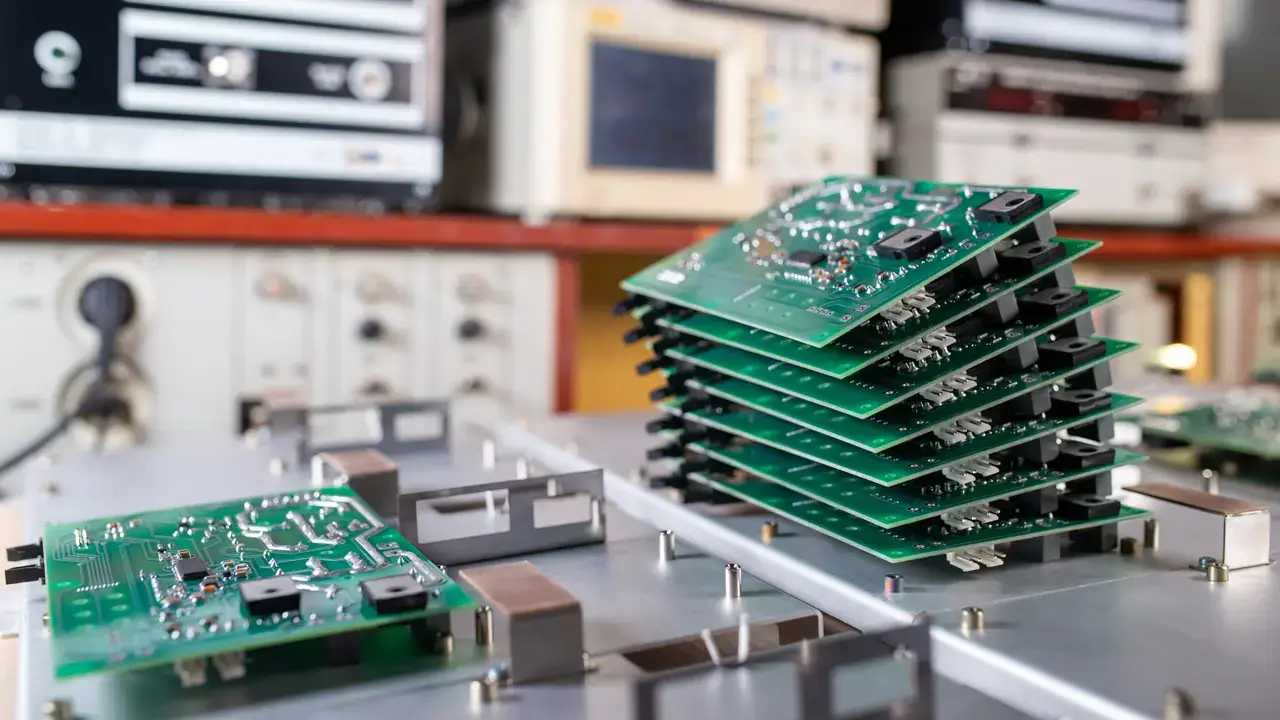
Process Equipment and Control Data
| Stage | Equipment / Method | Equipment Data | Scope | Output |
|---|---|---|---|---|
| Solder paste printing | GKG printer | ±18 μm printing accuracy | Fine-pitch SMT, 01005, 0.25 mm pitch | Paste deposit setup |
| Solder paste inspection | PEMTRO SPI | 0–450 μm detection height range | Paste volume, height, offset | SPI result data |
| Component placement | SMT mounter | ±35 μm equipment specification under stated machine conditions | Chip, connector, IC placement | Placement control |
| IC placement | SMT mounter | ±25 μm IC-placement equipment specification under stated machine conditions | QFN, BGA, large IC | Package alignment |
| Component range | SMT mounter | 01005 to 55 × 55 mm; W45 × L100 mm connector | Small chips, large devices | Feeder and nozzle setup |
| Reflow soldering | 20+ heating zones | ±1°C temperature control | SMT, mixed assembly | Profile verification |
| AOI inspection | AOI system | 140 FPS camera; telecentric lens | Polarity, solder joint, placement defect | AOI record |
| First article inspection | FAI system | Automatic programming; first report generation | First-piece check | FAI report |
| X-ray inspection | X-ray, μCT, 3D AXI | 160 kV, 10 W | BGA, hidden joint, internal defect review | X-ray image data |
Which Records Support Final Release Decisions?
Shipment approval depends on the required quality checks, inspection records, test results, and shipment documentation. The record set should match the product risk and the acceptance conditions agreed between the supplier and the customer.
For electrical verification, ICT, ATE, and functional testing serve different purposes when included. ICT verifies nets when suitable test points and fixture conditions are available. ATE and functional testing verification depends on a defined program, operating conditions, pass/fail limits, or provided procedures.
Aging or stress-based testing applies when a product requires time-based verification and must follow defined load conditions and pass/fail limits. Coated products, mixed assemblies, hidden joints, and special handling may require inspection images, first-piece records, and inspection records for approval.

Production and Verification Resources
| Resource | Capacity / Condition | Use | Required Information |
|---|---|---|---|
| High-speed SMT lines | 9 lines; up to 128,000 points/hour | High-speed SMT placement | Volume, feeder load, placement density |
| Medium-speed SMT lines | 9 lines; up to 66,000 points/hour | Medium-speed SMT placement | Package type, changeover, schedule slot |
| DIP lines | 8 lines | Through-hole insertion and soldering | THT count, soldering route, fixture requirements |
| Flexible assembly lines | 8 lines | Manual assembly, subassembly, custom configuration | Mechanical steps, operator process, work instructions |
| Conformal coating lines | 4 lines | Coating process | Coating area, no-coat area, masking requirements |
| ICT | Defined by project scope | Net-level electrical check | Test points, netlist, ICT fixture |
| ATE | Defined by project scope | Programmed electrical verification | Test program, limits, ATE fixture |
| Functional test | Defined by project scope | Product-level operating check | Test procedure, pass/fail criteria |
| Aging room / aging test | 36 m²; duration specified by project | Time or stress-based verification | Load condition, batch size, pass/fail limits |
| Management systems | ISO 9001:2015, ISO 14001:2015, QC 080000:2017, ISO 13485:2016, ISO 45001:2018 | Quality and compliance basis | Confirmed project scope |
Management system documentation and verification records should match the confirmed factory scope and project requirements. Special compliance documentation, test evidence, or additional release records need definition in the project specification or contract.
Why Can the Same Board Files Lead to Different Quotes?
Two suppliers can have different quotations for the same board files. The main reasons are differences in assumptions about materials, setup work, soldering preparation, inspection depth, testing coverage, and unresolved questions about the files. The lower quote may not include checks, fixtures, masking steps, preparation for testing, or clarification work that may be needed later in the project.
The first variable to affect the quote is material availability. When components need approved alternates, owner-arranged stock, or additional material availability checks, the purchasing assumptions change. The mix of package types can shape an estimate as well. Fine-pitch components, larger connectors, coating areas, and mixed SMT/THT may require preparation work that a simple placement quote may not include.
For instance, a board with coating keep-out areas around the connector usually requires more preparation than the same board without coating. The added preparation work comes from mask planning, connector protection, inspection after coating, and rework prevention, not from the coating name alone.
Similarly, preparation for testing creates a notable difference. Functional testing requires more information than just the name of the test. To accurately prepare a quotation, the quotation team needs to know the procedure, expected operating conditions, pass/fail limits, fixture needs, and expected record format. If the design includes setup work like fixture preparation, pallet use, preparation of coating masks, or setup of testing programs, those components of the setup can become part of the estimate.
An accurate quotation will highlight assumptions made in the estimate, so that scopes of work can be compared rather than simply the prices.
Upload BOM & Gerber
What SUGA Needs to Prepare an Accurate Quote
Generating an accurate quote requires more than just a board file. SUGA needs sufficient information to capture all aspects of assembly scope, component conditions, soldering method, test coverage points, and coating expectations. In certain situations, there may be conflicting information in key files. In those instances, the quotation team will stop to gather further clarification regarding the assembly condition instead of making a guess.
Typically, the core file set consists of a BOM, Gerber files, centroid file, and an assembly drawing, which all work together to define the identity, placement position, side, rotation, polarity, and connector orientation of each component, as well as the keep-out areas and revision alignment of the board. If there are impedance target specifications, controlled stack-up requirements, coating area specifications, flex handling needs, or special thermal conditions, those requirements should be included at the quote stage.
Testing information should be provided in submitted files if electrical or functional verification is included as part of the work being requested. The test procedure, pass/fail limits, fixture requirements, and acceptance conditions will define how verification evidence will be delivered following assembly. Also important are coating drawings, no-coat zones, notes regarding connector protection, and instructions for special processes that affect masking, handling, inspection, or record documentation.
Quote Inputs for Custom Assembly
| Required Input | Minimum Check | Risk Level | Missing-Data Risk | Status |
|---|---|---|---|---|
| BOM | MPN, value, tolerance, package, RefDes | High | Wrong part, sourcing delay, mismatch | Required |
| Gerber | Revision, copper, solder mask, silkscreen | High | Board-file mismatch | Required |
| Centroid file | X/Y, rotation, side, RefDes | High | Placement error | Required |
| Assembly drawing | Polarity, connector orientation, keep-out | High | Assembly error | Required |
| Stack-up | Layer order, dielectric, copper, impedance target | Medium | SI risk, fabrication mismatch | If applicable |
| Test procedure | Test steps, fixture need, pass/fail limit | Medium | Unclear acceptance basis | If testing is included |
| Coating drawing | Coated area, no-coat area, mask point | Medium | Connector contamination, rework | If coating is included |
| Special process note | Flex bend area, large connector, thermal mass, RF area | Medium | Process route conflict | If applicable |
Aligned files help the quote represent actual project requirements, rather than broad estimates that may be generated without them. They also reduce back-and-forth communication when revisions are required due to conflicts in material, placement, soldering, clearance, or handling.
Frequently Asked Questions
You will need to submit a basic set of files. These files typically include a BOM, Gerber files, a centroid file, and an assembly drawing. There may also be other files required based on the coating and testing requirements of the assembly, as well as special handling. The input list above can be used as a checklist when a file is missing.
Yes, mixed SMT and THT assembly can be evaluated if the design includes appropriate placement, soldering, clearance, and handling conditions. Prior to starting, confirm the assembly sequence, fixture need, masking method, and solder areas that can be checked.
Purchasing responsibilities on the supplier side can be discussed when purchasing is part of the order request. Some orders use provided components, while others require the supplier to source components or review alternate sources. The purchasing responsibilities for the project should be confirmed early in the process; they can significantly impact the timing of the quotation as well as the material assumptions and shortage resolution.
The cost will be based on the actual project scope and not just the number of boards being produced. Material availability, package mix, amount of preparation for coating, extent of testing, and amount of preparation required to set up the assembly all influence the assembly estimate. Any comparison should account for the full scope in each quote, not price alone.
Timing will depend on the quality of the files submitted, availability of the needed materials, complexity of the assembly, test requirements, and special handling steps. A design that requires substitutions, fixture preparation, coating masking, or defined functional testing will require additional coordination. SUGA will confirm assumptions made in the schedule once the project information has been verified.
Testing can include electrical, functional, inspection, or aging checks, based on what the project requires. A proper testing method is based on test points, fixture availability, provided procedures, pass/fail limits, and product risk. Testing should be defined during the quote process rather than treated as a general assumption.
Yes. Shaped boards can be evaluated when the outline, panel layout, fixture needs, and handling requirements are determined. Be sure to confirm whether the shape affects placement stability, warpage, soldering area access, or accessibility to the inspection path.
There can be many factors that constitute cost differences between suppliers in different areas, including labor cost structure, access to supply chains, how components are purchased, communication requirements, logistics, and inspection expectations. For example, an assembler located in the USA may have a different price structure than a supplier located in China. However, any comparison must take into consideration the overall project scope, material ownership, testing requirements, and assumptions about delivery.
Not necessarily. A quote that is too low may lack information regarding file clarifications, fixture preparations, test setups, inspections, or handling steps that may be needed by the project. The included scope of work, missing assumptions, and identified risks should be evaluated before making a selection.