Upload BOM & Gerber
-
Mobile: +86 13312967631
-
Email: sales@sugaintl.com
About SUGA
20+ Years Shenzhen Marketing & Operation Center
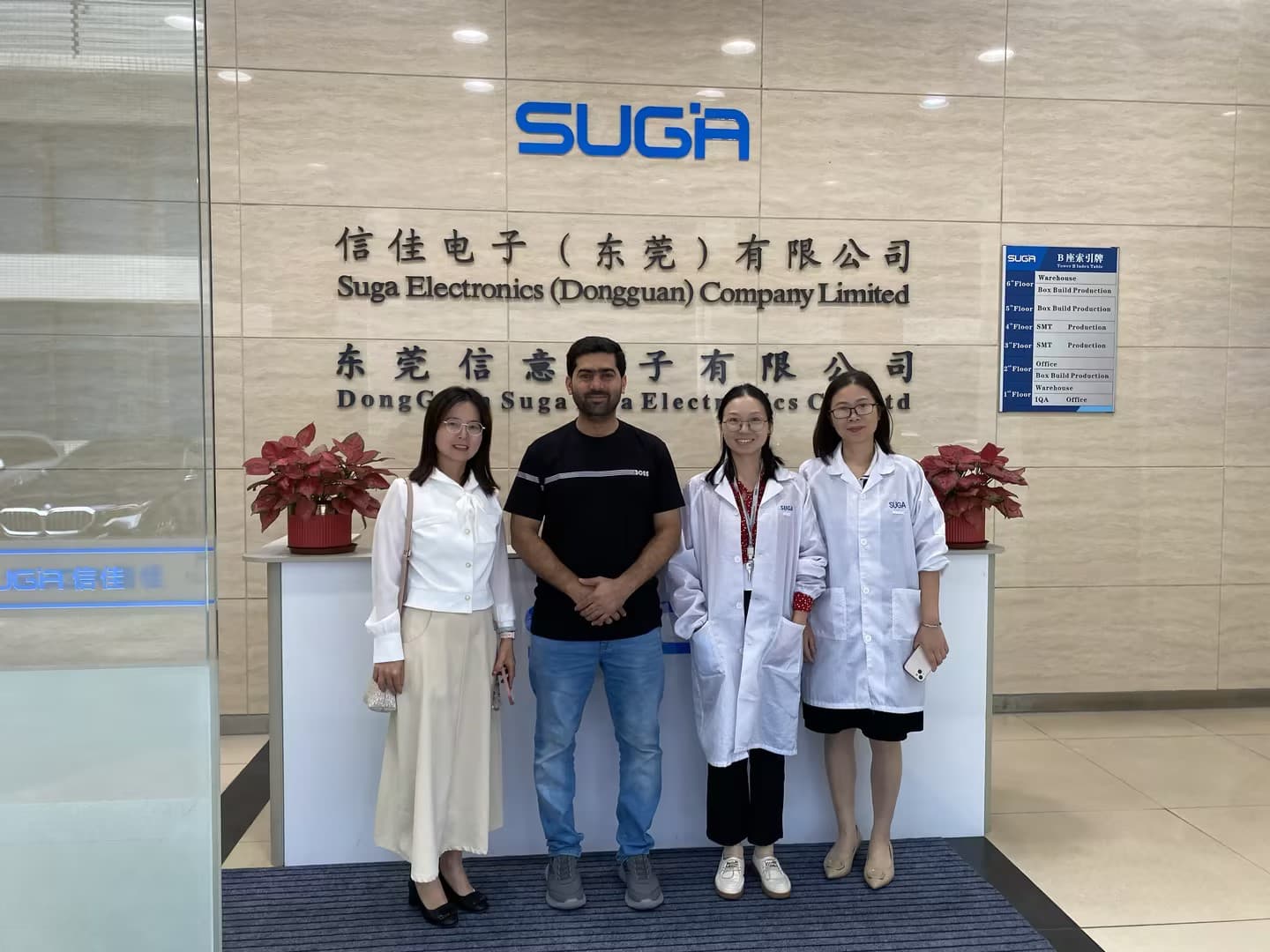
When an Original Equipment Manufacturer (OEM) starts to work with an electronics manufacturer in China or Vietnam, the first risks often appear before production starts: not having accurate files to start the project, delays in receiving responses to quotation questions, sourcing uncertainty, incorrect assumptions about how your product will be tested or validated, and friction related to time zone differences. SUGA established the Shenzhen Marketing & Operation Center in 2006 to alleviate these types of early frustrations. The Shenzhen center provides overseas project teams with one front-end team for project-related technical conversations, commercial intake, file review, and project follow-up.
The role of the Shenzhen Marketing & Operation Center differs from SUGA's Hong Kong headquarters and from SUGA's manufacturing sites in Dongguan and Vietnam. It also serves as the customer-facing operation center for the Hong Kong-listed SUGA International Holdings Limited business. The center connects project requirements with the design, sourcing, manufacturing, and quality resources of SUGA International Holdings Limited's group of companies.
SUGA International Holdings Limited was established in Hong Kong and is presently listed on the Main Board of the Hong Kong Stock Exchange with the stock code 912. According to the group's fiscal year 2023 information, total group revenue was more than US$240 million annually, with approximately 102,000 sq. m. of manufacturing and research and development (R&D) facilities and more than 2,700 people employed across the group.
The group's distribution of business demonstrates SUGA's well-established international presence with North America at 51%, China at 16%, Japan at 13%, Europe at 11%, and Australia at 5%. In addition to its Shenzhen Marketing & Operation Center, SUGA has international offices located in Washington, USA; Limerick, Ireland; and Tokyo, Japan, providing additional regional points of contact. Shenzhen remains SUGA's primary point of contact for quotation and program communications.
From Hong Kong Roots to a China and Vietnam Network
SUGA began in Hong Kong in 1991, when Suga Electronics Ltd. was established. A factory operation started in Buji, Shenzhen, in 1991. The business extended its manufacturing base in the Greater Bay Area by expanding operations into Huizhou, Guangdong, between 1992 and 1994.
SUGA International Holdings Limited became publicly listed on the Main Board of the Hong Kong Stock Exchange in 2002, providing overseas teams with greater transparency regarding corporate governance, as well as a stronger avenue to evaluate long-term supplier risks.
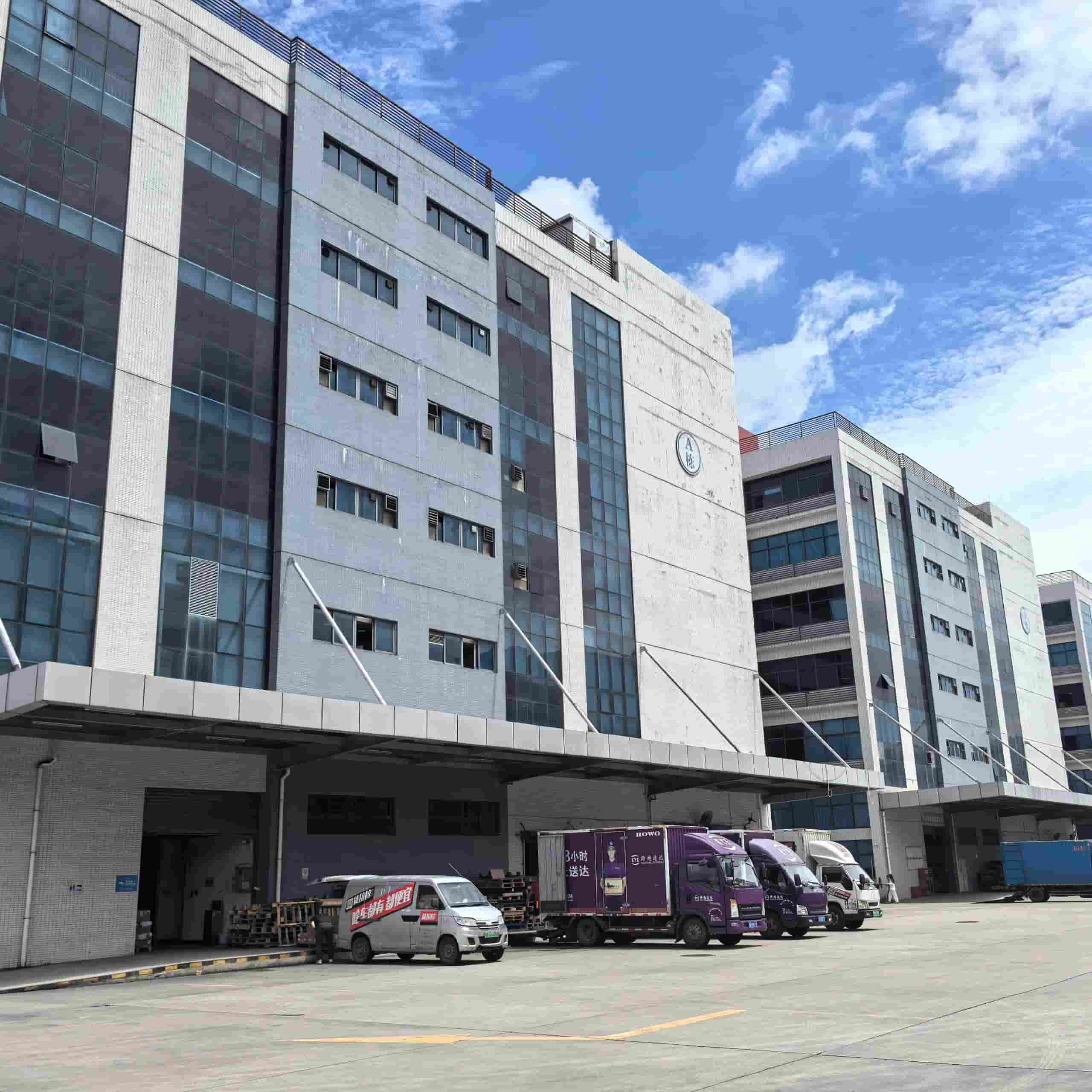
In 2018, the company entered a new phase of growth in its manufacturing operations. The company's manufacturing operation located in mainland China was consolidated and upgraded into the factory operation located in Qingxi, Dongguan. It also established a wholly owned subsidiary in Bac Ninh, Vietnam, to provide a broader regional supply strategy.
Engineering Resources That Turn Data into Production Decisions
SUGA has about 340 employees in the following departments: design and development of new products, new product introduction (NPI), preparation of processes for new products to go into production, testing, and quality. The value is derived from the people and expertise provided to convert drawings, bill of materials (BOM) data, testing needs, and product risk into purchase, trial production, or volume production decisions.
| Function | People and Composition | Project Value |
|---|---|---|
| R&D | 35 people total: 12 electronic design engineers, 13 mechanical design engineers, 3 industrial design engineers, 4 software development engineers, and 3 senior project managers. | This function evaluates a product concept, including the mechanical structure, electronic component details, software-related questions, and project risks before releasing the product to manufacturing. |
| NPI | 29 people: 10 electronic engineers, 12 mechanical engineers, 4 packaging engineers, and 3 BOM data specialists. | This department uses design data and creates a trial production plan for each type of product, ensuring BOM data clarity, determining packaging needs, potential assembly risks, and pilot-run readiness. |
| Manufacturing Engineering | 147 people: 21 surface mount technology (SMT) engineers, 15 DIP engineers, 16 product assembly engineers, 6 automation engineers, and 89 professional technicians. | This department is responsible for creating the process for producing a product, including fixture approach, process sequence, how the components are assembled together, automation needs, and the appropriate balance among the processes needed for stable line output. |
| Testing | 81 people, including 28 test engineers, 3 failure analysis engineers, and 3 test development engineers. | This department defines how testing will be conducted on a product, develops fixtures that support automated testing, sends out information for failure analysis, and links testing results with the specifications of the product. |
| Quality Engineering | 48 people dedicated to product quality in the areas of supplier quality, incoming quality, outgoing quality, in-process quality, and engineering quality. | Quality Engineering maintains quality records, including supplier input checks, process monitoring and documentation, and outgoing verification, to enable product quality evaluation. |
For a non-engineering decision maker, this means fewer unresolved questions before factory release. Relevant information on sourcing risk, assembly fit, test accessibility, fixture requirements, and outgoing records remains connected to the discipline where the answers reside.
SUGA also uses professional design for manufacturability and design for testability review tools to perform deeper file checks prior to volume production for projects requiring this type of in-depth verification. The design for manufacturability process will verify if a product can be manufactured consistently, and the design for testability process will verify that defects can be detected in a practical test flow. The business value is direct: file-level blockers can be found before they create rework, schedule loss, or engineering change costs.
Dongguan and Vietnam Production Sites
SUGA maintains two production sites in China and Vietnam under a single group structure. This structure supports capacity, cost, tariff planning, and regional delivery strategy decisions, without requiring a new long-term supplier relationship to be built from the beginning.
Dongguan Manufacturing Base, China
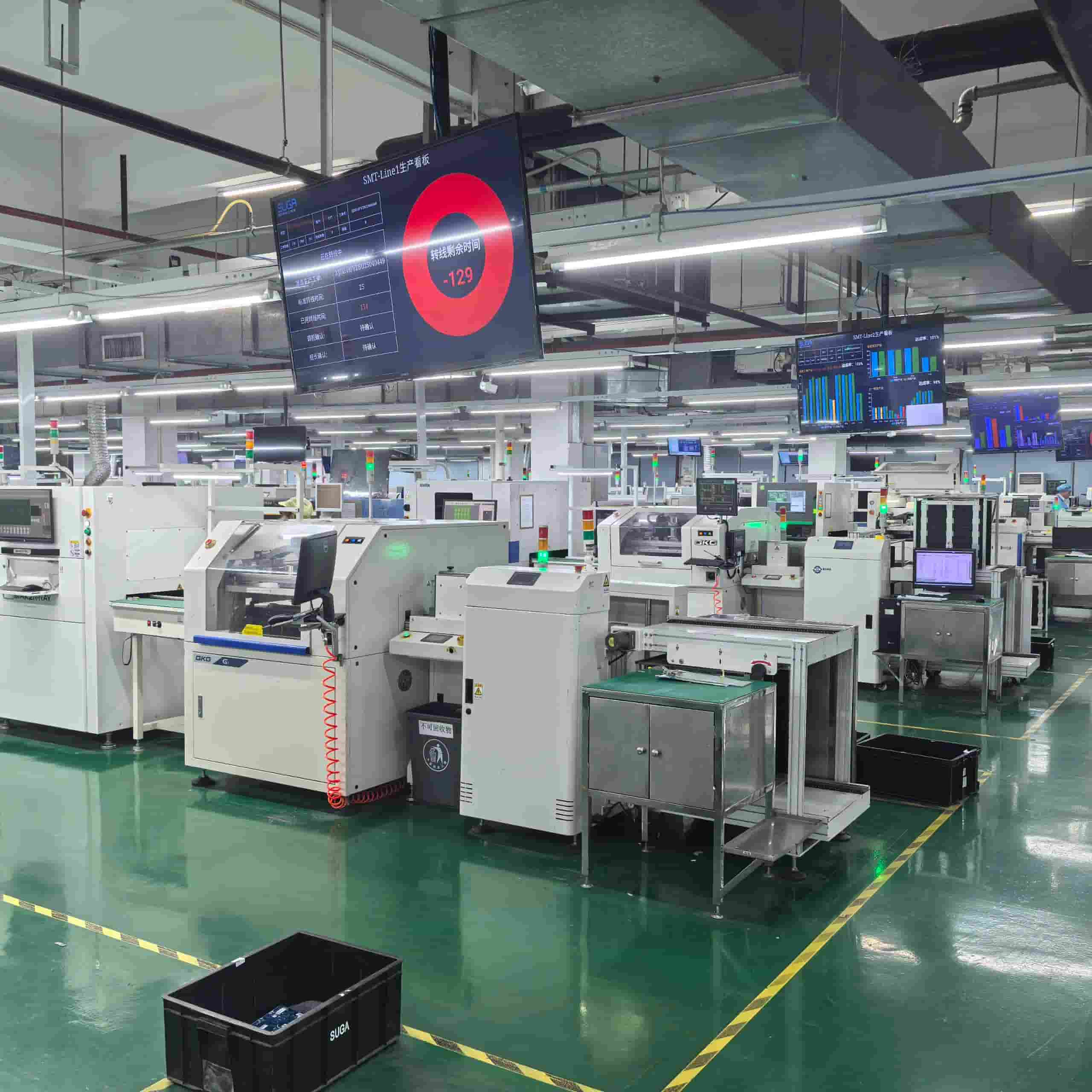
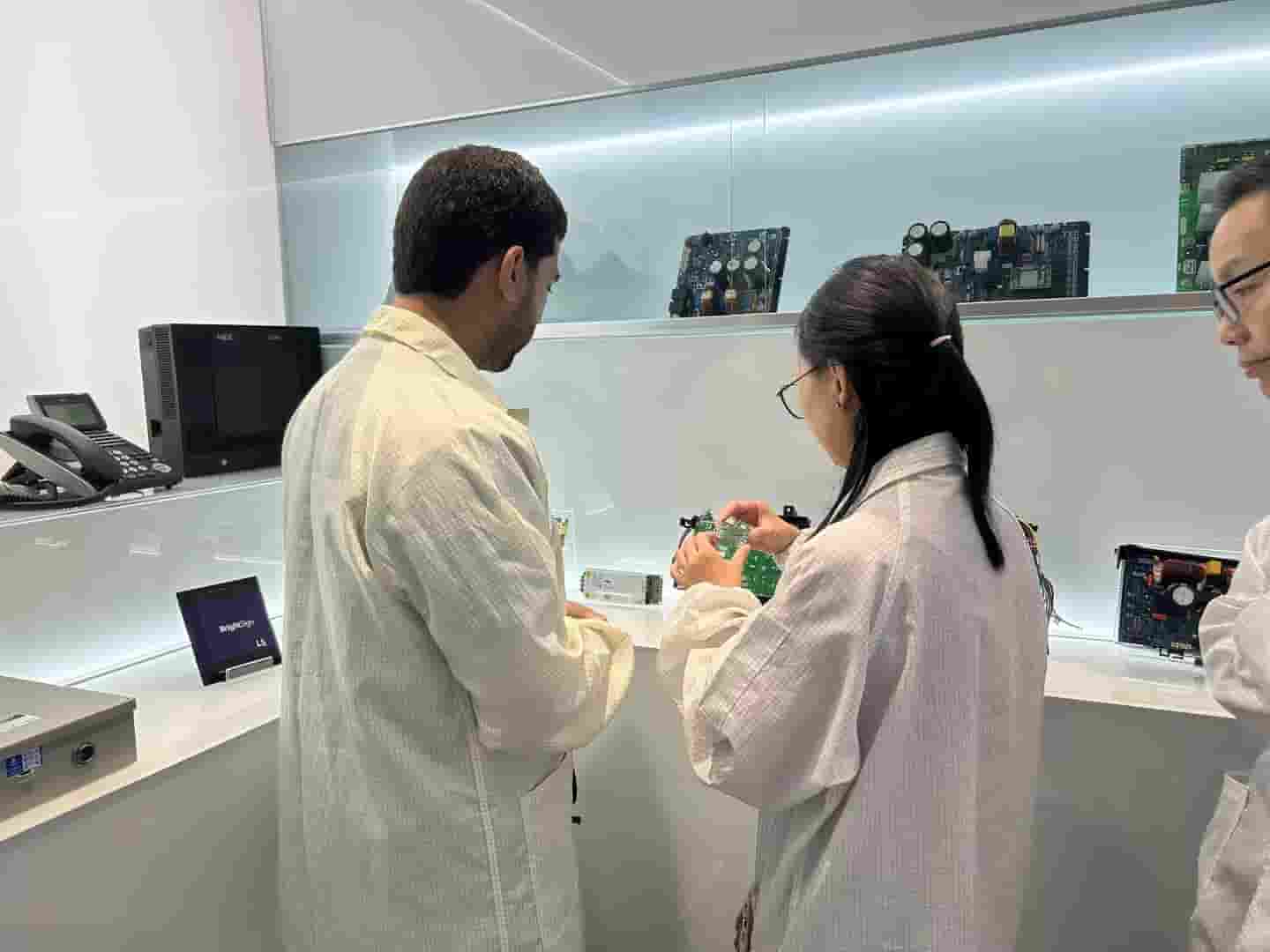
Dongguan is the primary manufacturing plant for SUGA’s operations in China. The operation has approximately 50,000 sq. meters of manufacturing floor space and more than 1,300 people. In addition to manufacturing high-mix electronics, Dongguan has the ability to perform printed circuit board assembly, box build assembly, product integration, and programs requiring close coordination among manufacturing, quality, and testing teams.
The Dongguan plant has a total of 15 SMT production lines, utilizing high-end Fuji and Yamaha manufacturing equipment, 10 automatic insertion machines, 1 bonding machine, 18 dedicated PCBA lines, and over 40 product assembly lines. Automated screwdrivers, automated dispensing systems, automated packaging, and functional test equipment are incorporated whenever required based on specific products and manufacturing processes.
The Dongguan plant also has a Class 10000 clean room designated for use with environmentally sensitive products, such as LCD module assembly and front panel assembly.
Bac Ninh Manufacturing Base, Vietnam
Established in 2018, SUGA’s Vietnam factory is wholly owned by the group. The Bac Ninh base has approximately 40,000 sq. meters of manufacturing space and approximately 700 people.
The Vietnam operation is equipped with 6 SMT production lines, 2 bonding machines, 4 PCBA production lines, and over 30 finished product assembly lines. It offers another regional option while being linked to SUGA’s wider operating system and commercial communication structure.
Core Markets and Product Experience
SUGA focuses on product types for which process control, test planning, supply discipline, and final product handling directly impact the resulting products. The portfolio of products that SUGA produces includes the following areas.
| Market Area | Portfolio Share | Typical Product Experience |
|---|---|---|
| Consumer products | Approx. 30 percent | Smart pet devices, feeding systems, GaN fast chargers, and home appliance control boards for air conditioners, refrigerators, televisions, washing machines, range hoods, and dishwashers. |
| Professional audio | Approx. 20 percent | Sound consoles, microphones, headphone amplifiers, preamplifiers, effects processors, DJ controllers, MIDI keyboards, and USB audio interfaces. |
| IoT products | Approx. 20 percent | Asset trackers, cold-chain tracking devices, vehicle-related electronics, retail IoT cameras, connected dongles, and smart cycling devices. |
| Industrial and POS products | Approx. 19 percent | HMI controllers, automation control boards, public transport payment readers, barcode scanners, security and video analysis terminals, and battery management modules. |
| Telecommunication products | Approx. 10 percent | Business telephone systems, video telephones, MiFi devices, CPE routers, and related communication electronics. |
The product mix illustrates why SUGA is positioned as more than simply an assembly-only vendor, with many programs encompassing electronics, enclosure fitting, firmware-related requirements, inspection methods, test flow, packaging, and final product release as a single manufacturing flow.
Responsible Operations and Supplier Evaluation Evidence
SUGA maintains responsibility claims with evidence-based methods of verification. SUGA presents certificate images and supporting documentation so the document, issuing body, and date of issue can be checked directly.
For supplier evaluation, SUGA's management system documentation, quality-related documents, material or compliance declarations, and release evidence provide the information that procurement and quality personnel require for review, while still keeping public claims conservative.






Why SUGA
What distinguishes SUGA from its competitors is that SUGA does not rely on slogans, but on verifiable information: a Hong Kong Stock Exchange-listed company profile, FY2023 annual sales in excess of USD 240 million, an operating area of more than 102,000 square meters, 51% North America business distribution, and wholly owned manufacturing plants in China and Vietnam.
SUGA's verifiable support is important because OEM programs have inherent risks. For example, a BOM that is not clearly defined can jeopardize a quotation. Delays may occur if a test access problem is discovered too late after launch planning has started. A regional supply plan can become more expensive if China and Vietnam options are handled by unrelated suppliers. SUGA is designed so that these decision gaps are managed before they develop into production issues.
For project value, the primary difference is greater control over production operations. Early files can be reviewed together with manufacturing and test logic. Inputs for the trial production phase can be taken from personnel dedicated to NPI, process preparation, testing, and quality. Regional capacity can also be evaluated through one group instead of restarting evaluation with a new vendor.
Contact SUGA Shenzhen Marketing & Operation Center to discuss your next EMS or PCBA project and the documentation needed for supplier review.