Upload BOM & Gerber
-
Mobile: +86 13312967631
-
Email: sales@sugaintl.com

Advanced PCB Manufacturing Service
Connect Advanced PCB Design to Manufacturing and Verification
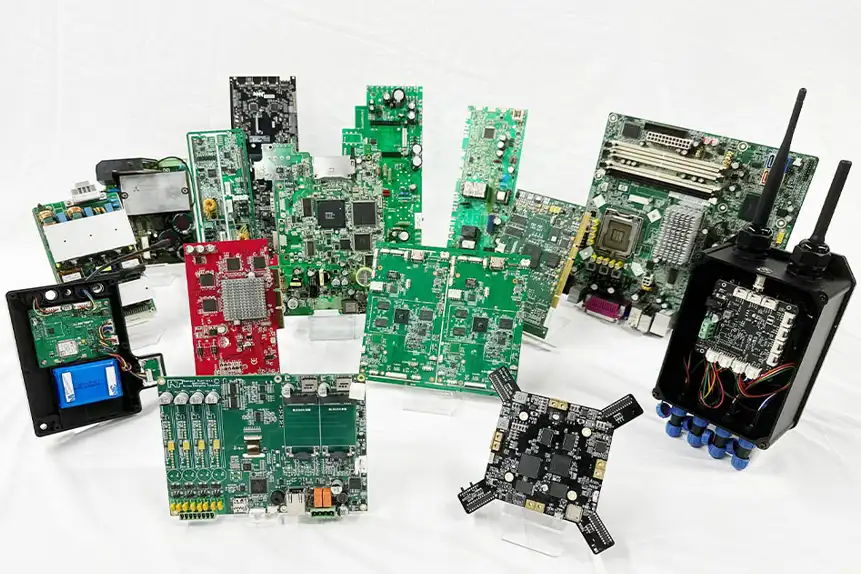
SUGA is an advanced PCB manufacturer in China connecting complex stackups, advanced materials, fabrication, inspection, electrical verification, and optional PCBA. Engineers align the stackup, laminate system, via structure, copper geometry, and verification plan for production. No single isolated maximum defines a manufacturable board; the usable window depends on how these requirements interact.
Up to 40 Layers
Down to 0.075 mm Laser Microvias
Up to 10+N+10 Any-Layer
What Are Advanced PCBs?
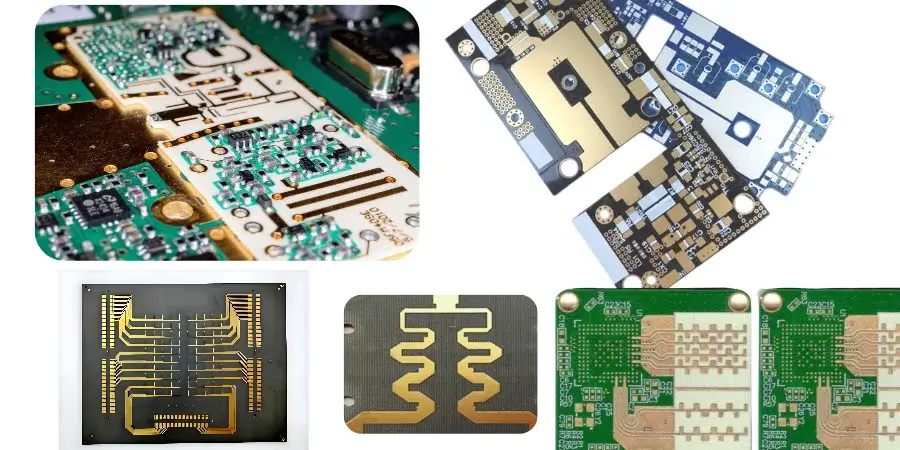
The definition of an advanced PCB goes beyond the number of layers. To be considered an advanced PCB, the board will have one or more characteristics that require tighter or more complicated process control than those required for a standard board—this could include the materials that make up the board, the density of interconnects on the board, the thermal load placed on the board, the mechanical duties of the board, or the verification requirements of the board. A low-layer RF board, a flexible medical circuit, and a thick-copper power board can all require advanced PCB manufacturing capabilities for different reasons.
Advanced PCBs may have requirements that interact across the manufacturing window. For example, local traces that may be verified as manufacturable could be affected by heavier finished copper that changes the etch window. Similarly, low-loss cores may be able to provide the required electrical specifications; however, they may require different drilling, bonding, or dimensional controls. Therefore, an engineer must identify the functional constraint that will dictate the design of the advanced PCB and then develop a structure that uses materials, geometry, process sequences, and verification plans that work together.
| Design factor | Conventional PCB | Advanced PCB | Selection consequence |
|---|---|---|---|
| Material system | General-purpose FR-4 with established lamination behavior | High-Tg, low-loss, PTFE, polyimide, ceramic, metal-base, and hybrid material systems | Electrical loss, thermal expansion, moisture behavior, bonding and machining must be considered together |
| Interconnect structure | Through-hole or conventional multilayer connections | HDI, Any-Layer, blind/buried vias, stacked or staggered microvias, flex and rigid-flex | Connection density and required layer-to-layer access determine the stackup and lamination structure |
| Trace and space | Common production geometry such as 5/5 mil | 4/4 mil and below, including local 1.5/1.5-2/2 mil capability | Local minimum geometry must be separated from the repeatable full-board window |
| Hole formation | Conventional mechanical drilling | Laser microvias down to 0.075-0.10 mm and mechanical holes down to 0.15 mm | Hole type, depth, aspect ratio, fill, plating, and electrical acceptance must match the via function |
| Thermal and current loading | Standard copper distribution and board-level heat spreading | Heavy copper, copper coins, embedded copper, thermal vias, metal-base, DPC, DBC or AMB ceramic structures | Current path, heat-source area, insulation and attachment method determine the structure |
| Flatness and dimensional control | General drawing and assembly limits | Tighter flatness, registration, thickness and controlled-dimension limits | Limits follow board size, copper balance, package type and downstream assembly rather than an arbitrary advanced/standard percentage |
| Verification | Standard electrical continuity and visual acceptance | Four-wire resistance, TDR, microsection, IST, thermal testing, X-ray, material traceability and linked reports | Verification is selected from the failure risk and the published capability being proved |
| Decision trigger | Conventional processes satisfy all functional constraints | One or more material, density, geometry, thermal, mechanical or verification requirements exceed conventional windows | Move to an advanced process structure before the stackup and test limits are finalized |
Advanced PCB Technologies
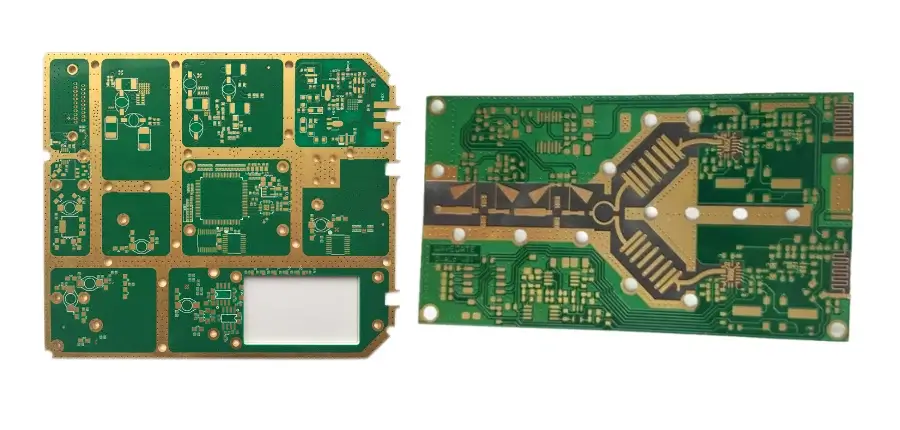
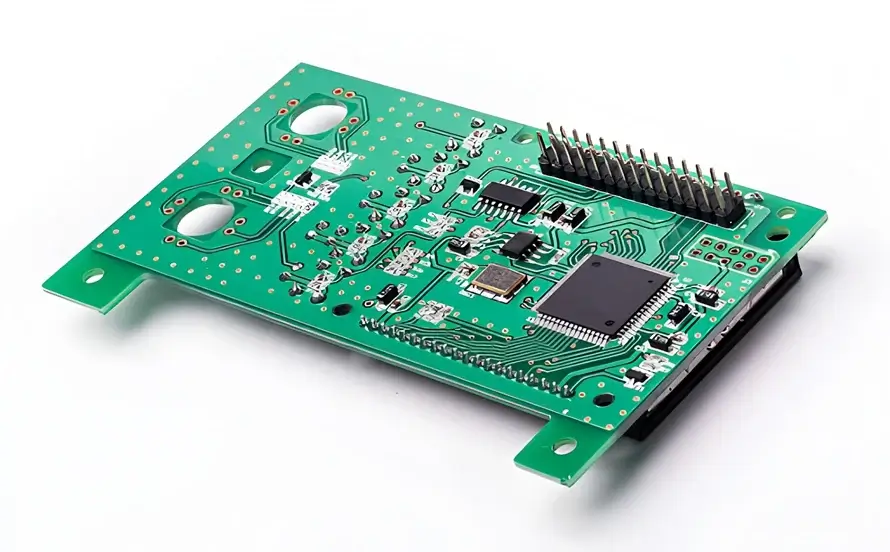
SUGA Advanced PCB Capabilities
SUGA supports advanced multilayer PCB structures up to 40 layers, from stackup alignment and material selection through bare-board testing and optional PCBA.
| Capability | SUGA Capability | Key design interaction | Primary acceptance evidence |
|---|---|---|---|
| Layer count | Up to 40 layers | Stackup, material, copper distribution, board thickness, drill structure and usable area must agree | Stackup record, registration inspection, AOI, microsection and electrical test |
| HDI build-up | 1+N+1 through 7+N+7 | Required drill pairs, dielectric depth, microvia land and actual lamination sequence | Build-up drawing, microsection, fill/cap inspection and electrical test |
| Any-Layer HDI | Up to 10+N+10 | Adjacent-layer connection demand, stacked-via structure, registration and repeated thermal exposure | Microsection, thermal or IST testing, and electrical test |
| Inner trace/space | Down to 1.5/1.5 mil locally; 2/2 mil production examples | Base copper, line length, local density, etch compensation and yield | AOI, coupon or cross-section inspection and dimensional measurement |
| Outer trace/space | Down to 2/2-2.5/2.5 mil examples | Finished copper, plating distribution, board area and solder-mask registration | AOI, dimensional inspection and final copper measurement |
| Laser microvia | Down to 0.075-0.10 mm; typical aspect ratio about 0.8:1 to 1:1 | Dielectric depth, land size, fill, copper cap and registration | Microsection, X-ray where applicable, copper measurement and electrical test |
| Mechanical finished hole | Down to 0.15 mm | Board thickness, tool size, material, hole tolerance and plating | Hole measurement, copper thickness and electrical test |
| Mechanical PTH aspect ratio | Up to 20:1 | Hole diameter, finished board thickness, desmear, plating distribution and thermal stress | Microsection, hole-copper measurement and reliability testing |
| Conventional heavy copper | Outer copper up to 10 oz+; inner copper up to 4-6 oz | Spacing, etch factor, resin fill, copper balance and thermal mass | Cross-section, copper measurement, dimensional inspection and electrical test |
| Specialized copper structures | Selected coin, busbar or embedded-copper structures approaching 1000 μm | Copper formation method, insulation, bonding, planarity and attachment | Cross-section, interface inspection, flatness, and electrical or thermal test results |
| Board thickness | 0.10-10.0 mm examples | Layer count, material family, copper, hole formation, profile and assembly handling | Thickness measurement, microsection and flatness record |
| Board size | Up to 609 × 889 mm | Material, layer count, copper balance, equipment window and registration | Dimensional report, AOI and flatness measurement |
| Controlled impedance | ±8% standard production; ±5% tighter control | Stackup, actual Dk, trace geometry, copper profile, coupon and process variation | TDR report and controlled-impedance coupon |
| Rigid-flex | 2-16 total-layer production examples; selected configurations with rigid sections up to 20 layers or flex sections up to 8 layers; these are separate limits, not additive | Total layer allocation, bend zones, coverlay, stiffeners, transition and copper orientation | Dimensional inspection, microsection, bend testing and material traceability |
| High-frequency mixed lamination | 2-20 layer examples | Material compatibility, bonding system, resin flow, plasma treatment and registration | Material-lot record, coupon, TDR and RF measurement |
| Ceramic substrates | DPC, DBC and AMB structures using Alumina, AlN or Si₃N₄ | Copper class, active area, substrate thickness, attachment, thermal cycling and insulation | Metallization, adhesion, insulation and thermal-cycle testing |
| Surface finishes | ENIG, ENEPIG, OSP, immersion Sn, immersion Ag, hard gold, silver plating, lead-free HASL and selected finishes | Assembly, wire bonding, contact wear, coplanarity and storage conditions | Thickness, solderability, appearance and finish report |
| Inspection and test methods | TDR, microsection, AOI, X-ray, electrical test, material traceability, thermal testing and PCBA inspection/testing | Match each method to the structure and risk it is intended to check | Lot-linked reports, images, measurements and traceable production data |
Technology Selection
HDI PCB and Any-Layer Structures
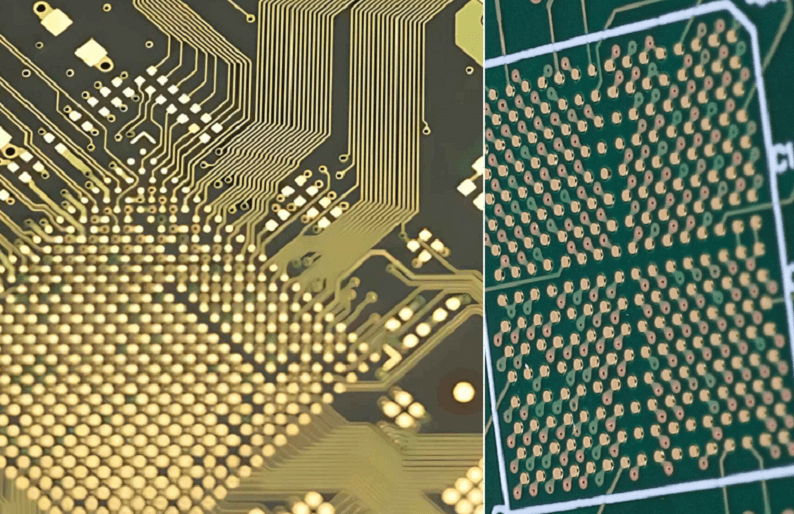
In the design of fine-pitch BGA escape and high I/O density, first create a layer-pair map and buildup sequence that represent the minimum number of buildup levels. With an HDI board, identify the layer pairs that must be connected and the available routing channels below the fine-pitch components. Conventional blind or buried vias may be sufficient for certain routing applications when fixed drill pairs complete the routing. Any-Layer buildup structures provide additional routing access at outer or adjacent layers, but these access points should be used only when routing density requires them.
Laser microvias and PTHs use different geometries and aspect ratios within their manufacturing windows. When designing a PCB layout, the dielectric depth, land size, filling, copper cap, registration, and other materials must remain compatible. The layout must also be compatible with the PCB construction and lamination sequence.
Blind, buried, stacked, staggered, and via-in-pad structures provide solutions for different connection requirements. A stacked-microvia approach decreases the planar area occupied by the vias while increasing the number of vertical interfaces. Staggered microvias may require more lateral space on the PCB. Filled and plated-over via-in-pad structures restore a planar surface below a fine-pitch component.
After fabrication is complete, the constructed structure can be evaluated using microsections, via-fill inspections, registration measurements, and electrical testing.
Material Choice for Signal Integrity
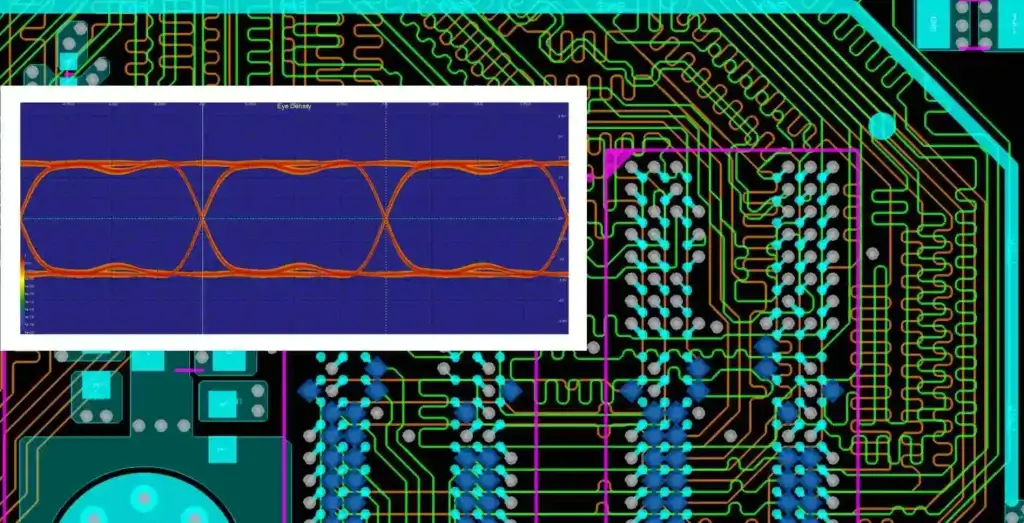
Selecting materials for high-speed, signal-integrity, and RF structures begins with the requirements of the completed channel, including insertion loss, impedance, phase stability, route length, skew, crosstalk, and residual via stub. Material selection is then based on Dk and Df stability, copper profile, glass construction, thermal behavior, bonding compatibility, availability, and fabrication response.
SUGA supports high-speed FR-4, ultra-low-loss laminate, RF laminate, and hybrid RF/FR-4 constructions. The material classification must align with the actual channel requirements and not just the data rate or laminate brand. The copper profile, glass weave, bonding characteristics, and backdrill condition will affect the remaining channel margin even when the laminate is nominally acceptable. The loss budget, Dk/Df stability, copper profile, backdrill condition, and finished stackup will determine which measurements, including TDR, insertion-loss coupons, VNA, or S-parameter measurements, are necessary for evaluation.

Flex and Rigid-Flex Structures
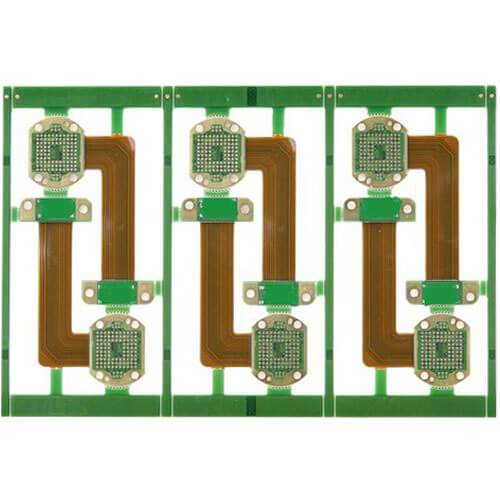
Flex and rigid-flex selection begins by differentiating between dynamic bend zones, static fold areas, and stiffened component locations in the design. The bend radius, cycle condition, copper orientation, coverlay, stiffener geometry, and rigid-to-flex transition shape must conform to the installation and layer allocation.
The flex sections and rigid interfaces of the assembly can be verified using dimensional inspection, transition microsections, bend testing, material traceability, and electrical testing.
Dynamic-bend areas of the PCB design keep plated holes, abrupt copper-width changes, sharp corners, and stiffener edges outside the active bend region. Static-fold areas may use a different copper pattern from dynamic-bend zones. When the PCB assembly is repeatedly flexed, strain is concentrated in the outermost copper layers and at the rigid-to-flex transitions.
Which Structure Matches the Heat Source?
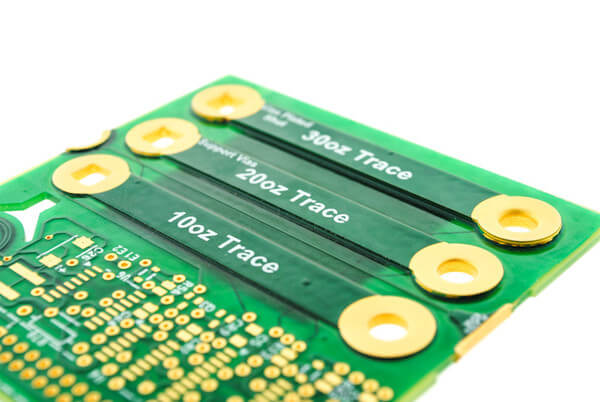
The thermal structure for the PCB assembly should be determined based on whether the concern is distributed current flow, a concentrated hot spot, or high heat flux requiring electrical insulation. Heavy copper distributes heat and electrical current across a wide area. Copper coins, copper inlays, embedded copper, busbar structures, and thermal vias shorten or extend the heat and electrical current path based on the position of the heat or current source.
Metal-core structures are intended for large-area heat spreading through a dielectric isolation layer. DPC is used for comparatively fine ceramic circuitry; DBC is designed for thick bonded-copper power modules; AMB functions as a high-reliability substrate using either Si₃N₄ or AlN. Dielectric spacing, resin fill, copper balance, insulation distance, bonding, planarity, attachment, and cycling requirements determine the usable structure.
For a PCB assembly with distributed high current, the copper section, interface condition, flatness, and thermal-path continuity will determine whether the structure remains intact. If the assembly is subjected to high heat flux that requires electrical insulation, the substrate, copper thickness, dielectric path, attachment method, metallization, adhesion, thermal cycling, and insulation testing will define the usable structure.
How Are Advanced PCBs Manufactured?
While Gerber or ODB++ data and NC drill files define the artwork and holes, they do not provide the complete Manufacturing Instructions. SUGA combines the input files into a single set of Manufacturing Instructions containing the Layer Structure, Material Family, Copper Weights, Controlled Dimensions, Surface Finish, Test Limits, and relevant PCBA requirements. If a drill pair, material condition, or acceptance limit is missing, a structural change may be required after Tooling has begun.
DFM and Manufacturing Data Confirmation
Through the DFM process, the Designer's intent is converted into a production-ready Manufacturing Specification. Using SUGA's manufacturing process, the connection map, build-up sequence, material compatibility, copper balance, Impedance Model, Controlled Features, Finish, and Verification requirements are aligned. The Engineering team accounts for Fine-Pitch Pad Condition, Flatness, Profiling, and other conditions that affect final assembly.
The approved stackup, materials, drill plan, controlled features, and inspection requirements serve as the baseline for each prototype and production run. Registration, Impedance, Hole Structure, Dimensions, and Final Acceptance are checked against the same Structural and Electrical requirements.
Inner-Layer Imaging and Sequential Build-Up
The circuitry is transferred to the Inner Layer by Imaging, and the conductors are defined by etching. Finally, AOI checks the Geometry of the Inner Layers before they are placed into the Stackup. Copper foil, prepreg, cores, and other structures are then assembled in the specified order. These layers can be pressed, drilled, plated, and then used in a subsequent lamination operation.
During these operations, registration error, resin-flow imbalance, uneven copper distribution, and material movement can compound through repeated lamination and multilayer PCB assembly.
Each stage of production is therefore controlled according to the final connection map of the multilayer PCB and is not treated as an individual press operation.
The registered multilayer PCB must be properly prepared for the exact mechanical and laser drilling processes that follow. This is one reason the written +N+ structure cannot replace the actual press sequence.
Drilling and Copper Plating
Mechanical drilling creates through holes and selected buried features, while laser drilling creates shallow microvias. Different laminates, stacked microvias, high-aspect-ratio mechanical holes, and heavy copper require different hole-wall preparation. Plasma desmear cleans and activates materials that do not respond like typical FR-4.
Electroless copper plating is the first step in creating a conductive copper layer on prepared hole walls. Additional copper is added during subsequent plating to achieve the required hole-wall thickness. Microvia filling may use resin or copper, followed by copper capping and planarization so that the feature can support another microvia or an assembly pad.
Incomplete desmear, weak interface preparation, uneven plating, or fill voids can produce insufficient hole-wall copper, barrel cracking, microvia-interface separation, increased resistance, or pad-planarity loss after filling and capping.
Outer-layer imaging, pattern plating, etching, and AOI define the finished external circuitry. The final copper area and geometry depend on plating distribution and finished copper, not only on the original artwork.
Outer-Layer Completion and Final Verification
Solder mask protects the circuitry and provides the required assembly clearances. The selected surface finish must support soldering, wire bonding, contact wear, shelf conditions, or another required product function. Profiling then creates the finished PCB outline and controlled mechanical features.
Electrical testing checks for shorts and opens. Controlled-impedance boards may use TDR testing on a production coupon or a defined transmission line tied to the selected stackup, while HDI, high-aspect-ratio, or specialized laminate structures may require specific structural inspection.
Final inspection includes dimensions, finish quality, pad planarity, flatness, cleanliness, marking, and compliance with the established limits.
Reliability Verification
A verification plan is established based on the dominant failure mode, production stage, required sampling plan, and physical evidence needed for acceptance of the completed structure.
| Failure concern | Inspection or test | Production stage / sampling | Acceptance evidence |
|---|---|---|---|
| Bare-board open/short risk | Flying Probe or fixture electrical test | Finished bare PCB | Netlist-linked electrical report |
| PCBA network and component-fault coverage | ICT or Flying Probe where physical access and test points permit | PCBA | Test-program-linked result and defect code |
| Inner/outer geometry and registration | Inner-layer AOI, outer-layer AOI and dimensional inspection | Bare PCB fabrication | AOI result, dimensional record and defect disposition |
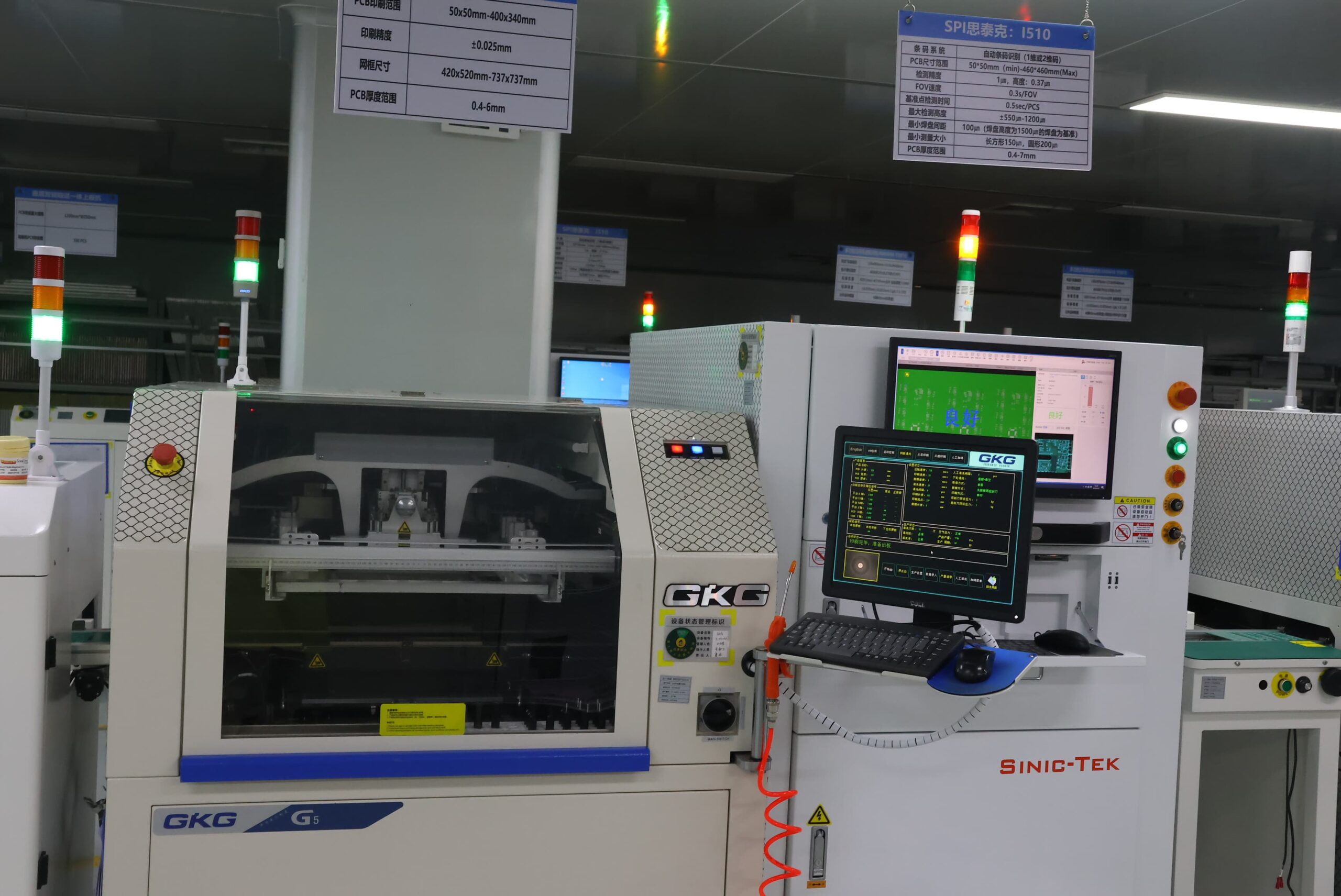
| Solder-paste volume and fine-pitch print risk | 3D SPI | PCBA solder-paste printing | Measured paste volume, height and area |
| Fine-pitch placement and visible solder-joint risk | 3D AOI | PCBA placement and reflow | Placement or solder-joint result and defect classification |
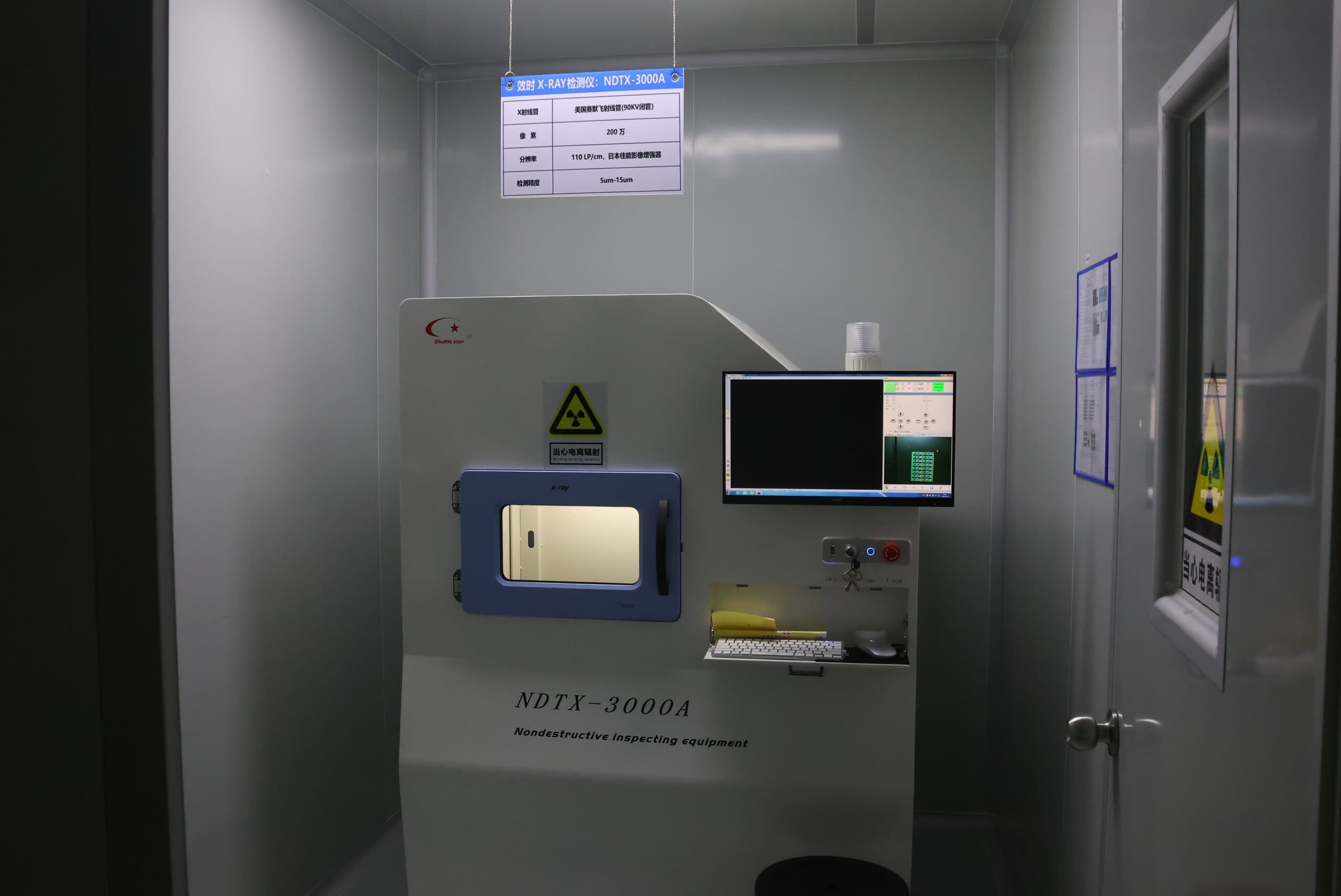
| Solder joints beneath packages or selected via-fill geometry | X-ray, oblique X-ray or 3D X-ray | PCBA joints beneath packages; selected bare-board structures | Images, measurements and disposition |
| Microvia interface and plated-hole risk | Microsection, copper measurement and thermal stress | Process qualification and lot verification | Microsection image, hole-copper result and post-stress result |
| Interconnect fatigue | IST and thermal cycling | Process qualification and reliability sampling | Resistance-change and cycle result |
| Controlled impedance | TDR with controlled-impedance coupon | Finished bare PCB | Lot-linked TDR report |
| High-speed/RF insertion loss or phase risk | Insertion-loss coupon, VNA or S-parameter measurement | Finished bare PCB or qualified test vehicle | Frequency-domain measurement and acceptance result |
| Functional risk | FCT; system-level or load-based functional testing | PCBA | Unit-linked functional result and failure code |
| Ionic contamination | Selected cleanliness method and limit, including ≤1.0 μg/cm² NaCl equivalent | Finished PCB or PCBA | Cleanliness measurement and method record |
| Solderability risk | Printed-board solderability test | Finished bare PCB before assembly | Wetting or solderability result |
| Insulation and withstand-voltage risk | Insulation-resistance, surface-insulation-resistance or hi-pot testing for the applicable voltage requirement | Bare PCB, test vehicle or controlled PCBA stage | Resistance or withstand-voltage result |
| Thermal robustness | Thermal stress, thermal shock or thermal cycling | Qualification or lot sampling | Post-stress electrical and structural result |
| Material and process traceability | Material lot, process history, inspection report and ERP-linked test data | Prototype through volume production | Traceable production and test record |
Structural Verification
The destructive and localized nature of microsectioning means the coupon or sample location must represent the plated-hole, microvia, copper-distribution, fill, cap, and interface conditions being accepted. Microsections measure hole-wall copper and interface conditions, while X-ray imaging can provide additional information on the location of voids, fill inconsistencies, alignment of plated holes and microvias, and hidden features; however, X-ray cannot replace copper-thickness acceptance.
Thermal stress, thermal cycling, or IST checks whether stacked microvias, high-aspect-ratio PTHs, and repeated-lamination structures maintain electrical continuity under repeated thermal loading.
To establish a controlled-impedance stackup, the material properties, including Dk, copper profile, dielectric thickness, and trace geometry, must be known.
Production coupons or designated transmission lines and TDR must be used to confirm the finished impedance of the product. TDR does not replace netlist electrical testing for opens and shorts.
High-speed and RF products may include insertion-loss coupons, VNA measurements, or S-parameter measurements to measure loss, phase, or discontinuity at different frequencies.
When designing coupons, the coupon must represent the finished board in terms of design, panel location, material lot, backdrill condition, fixture or de-embedding method, target, and acceptance limit.
Optional PCBA Verification
SPI measures the volume, height, and area of the paste before placement; however, it does not verify the quality of the reflowed joint. AOI verifies component placement and visible solder-joint characteristics, but it cannot comprehensively inspect solder joints underneath BGA, LGA, or other bottom-terminated components. X-ray inspection allows hidden solder-joint features to be inspected; however, the image does not verify the electrical or functional performance of the joint.
Physical access, test-point coverage, and the test program determine the effectiveness of ICT and FPT. Load conditions, stimuli, limits, and failure codes must be defined for FCT to be meaningful. When PCBA is included, these methods extend test coverage after components have been soldered onto the bare board. However, they do not replace bare-board structural, dimensional, impedance, and netlist acceptance testing.
Standards and Traceability
There are different acceptance standards and traceability requirements for PCBs according to the applicable product and customer class, including IPC-A-600M for printed-board acceptability, IPC-6012F for rigid boards, IPC-6013E for flex and rigid-flex boards, IPC-6018D for high-frequency printed boards, IPC-A-610J for assembled electronics, and J-STD-001J for soldered electronic assemblies. ISO 9001, ISO 14001, IATF 16949, ISO 13485, and AS9100D apply according to the management-system or sector requirements defined for the order.
The drawing, approved stackup, material lot, process history, inspection results, and test reports must identify the same product revision, production lot, coupon or sample location, test method, and acceptance limits.
Applications
5G Radio Module
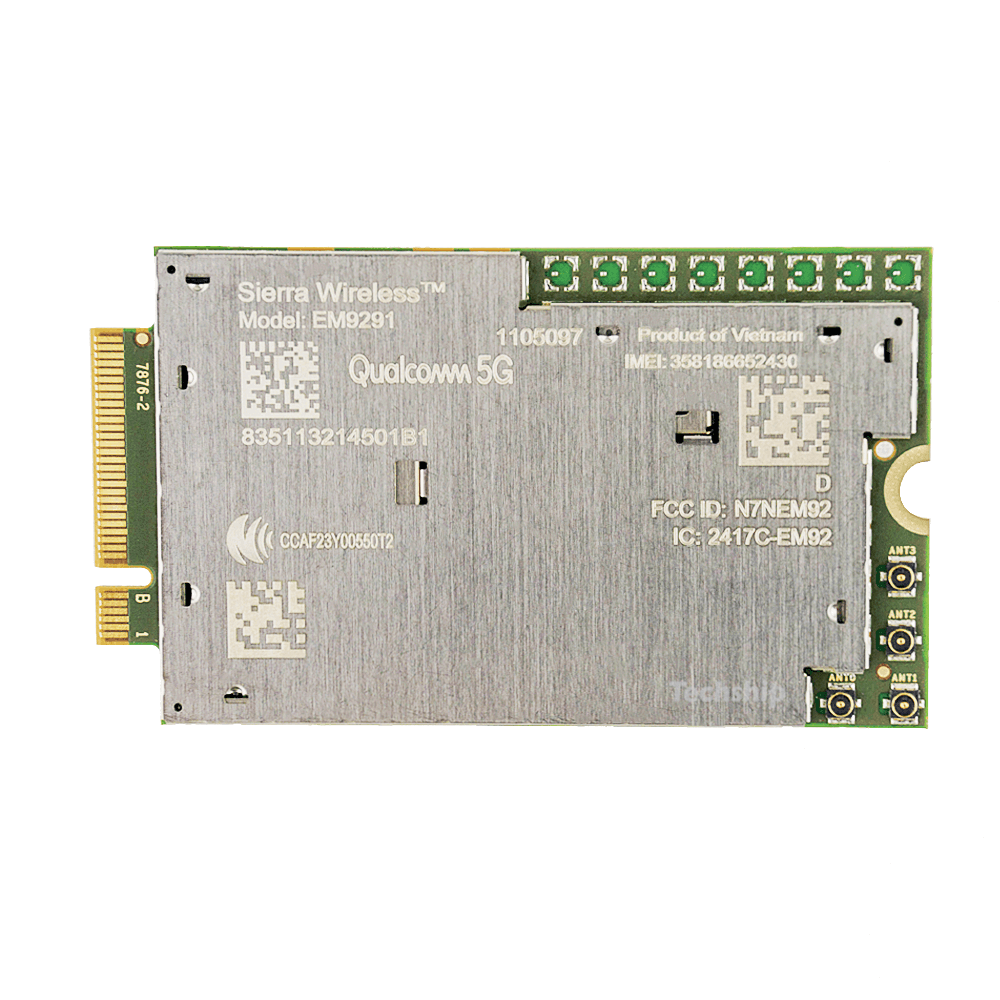
A typical 5G RF Module uses low-loss laminate, controlled impedance, a hybrid stackup configuration, grounded via structures, short RF transitions, and a controlled copper profile. To address impedance drift, interface discontinuity, and excessive insertion loss, material-lot control, dimensional inspection, TDR, and VNA or S-parameter measurement must be considered. Hybrid-material interfaces and copper roughness must be controlled because even small discontinuities can reduce RF channel margin. A common misconception is to qualify loss and impedance only on the low-loss core while treating the hybrid bond line and grounded-via transition as electrically neutral. Dk mismatch and via-stub reflection at this transition can add more phase and loss error than the base laminate. Therefore, quotation and acceptance should specify the operating band, laminate and copper-profile requirements, RF transition geometry, Impedance targets, insertion loss or phase limits, and coupon measurement ranges.
800G/1.6T Data-Center Switch
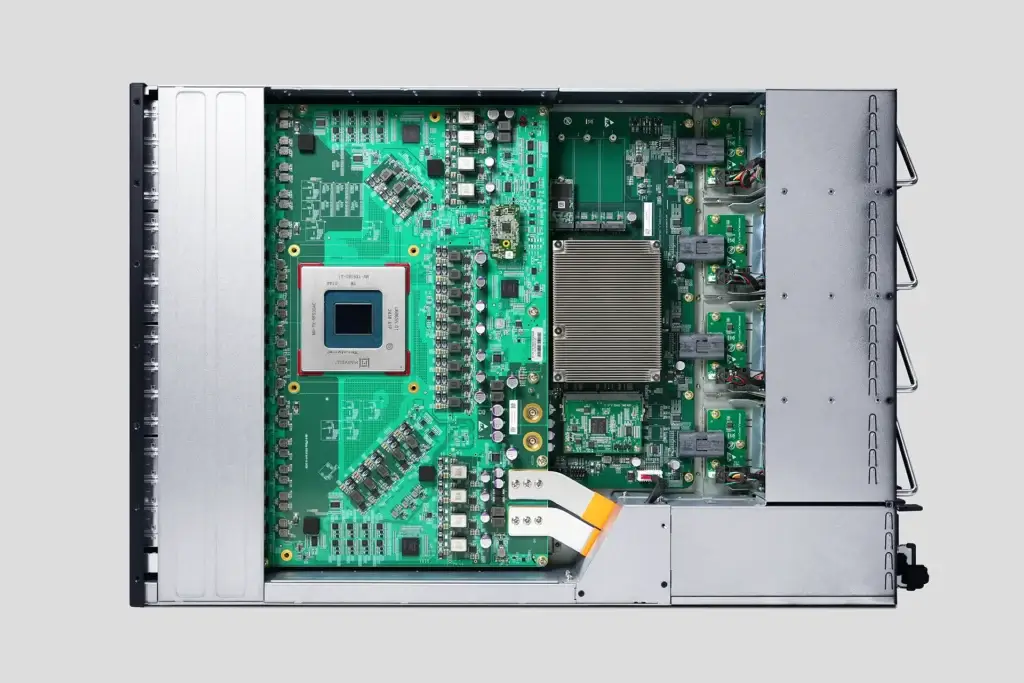
An 800G/1.6T Data Center Switch PCB incorporates a high layer count, 112/224 Gbps-class channels, ultra-low-loss materials, differential impedance, backdrilling, and dense BGA escape routing. Copper profiles, glass-weave alignment, residual via stubs, registration, TDR, insertion-loss measurements, and backdrill inspections determine whether channel margins are maintained. The residual-stub length must remain within the channel budget because every discontinuity adds reflection and loss. A common error is using the same stub lengths validated at lower data rates; the same stub length creates a resonant notch closer to the Nyquist frequency as data rates increase and must therefore be reverified against the actual channel rather than assumed from prior designs. The quotation review should include channel length, loss budgets, connector or package launch, residual-stub limits, material family, and required test frequencies.
Medical Wearable Flex
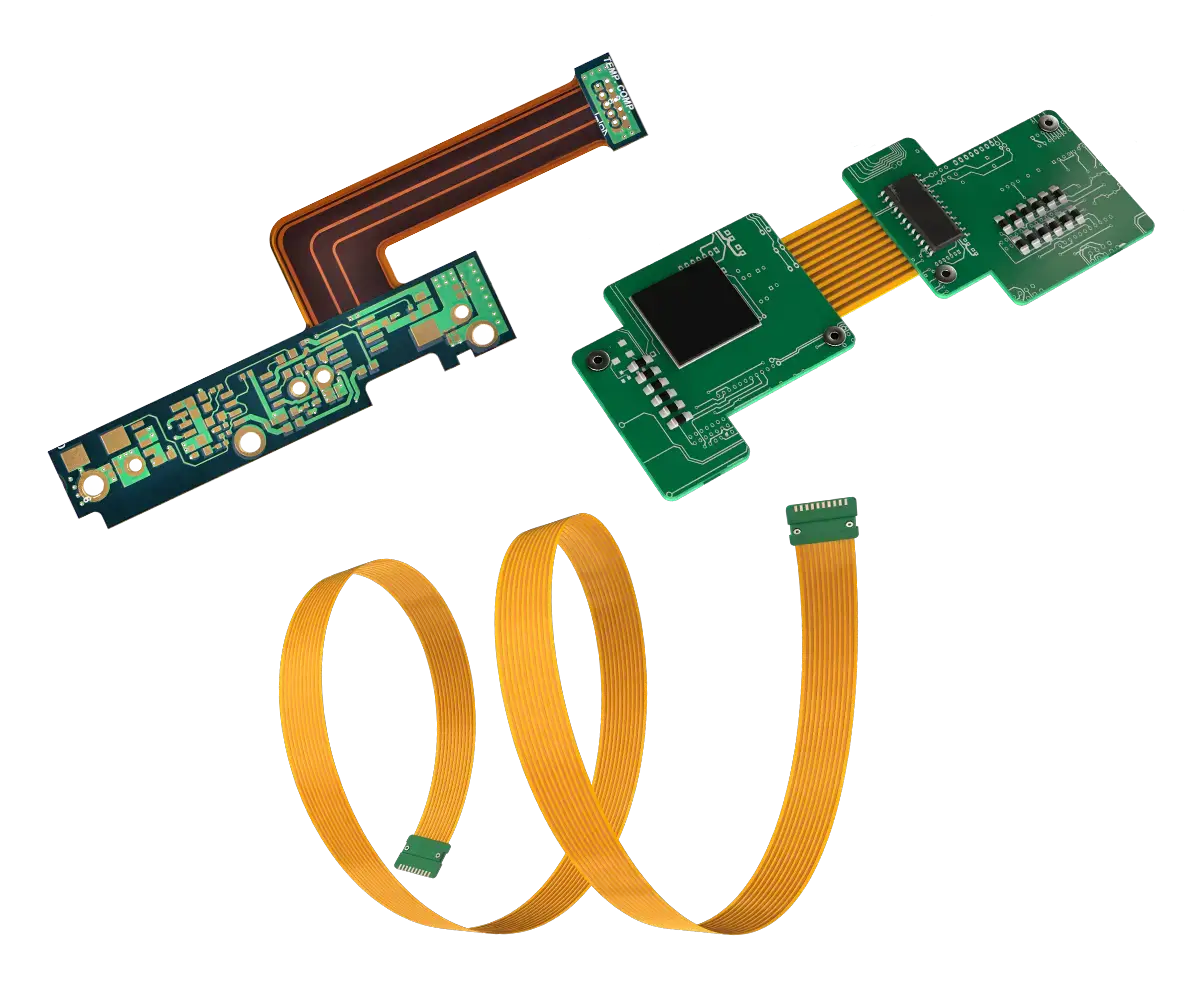
It consists of a flexible substrate with thin copper, stable dynamic bend zones, compact component areas, controlled cleanliness levels, and repeatable sensor and connector interfaces. Bend radius, copper orientation, transition geometry, cycle conditions, and inspection coverage control copper cracking, transition stress, and contamination.
Dynamic bend life and ionic cleanliness are controlled separately because the mechanical survival of a flexible PCB does not guarantee that electrical surface stability will be maintained. A PCB could survive the complete bend-cycle count but still fail due to ionic contamination, since flex fatigue and surface leakage develop through different mechanisms. The Manufacturing Package should clearly define whether each bend is static or dynamic, the minimum radius, expected cycle count, bend direction, flex-layer allocation, and the cleanliness method and limit.
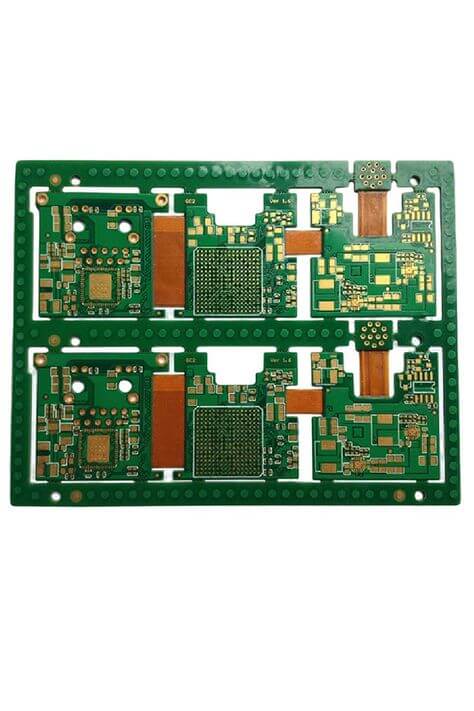
Aerospace Avionics Rigid-Flex
Aerospace avionics modules designed using Rigid-Flex PCB technology reduce the number of connectors required, allowing them to carry power and signals through a compact three-dimensional assembly exposed to vibration and thermal cycling. Reducing the number of connectors transfers more mechanical duty to the rigid-to-flex transitions, where vibration can increase local copper strain. A structure that passes bench continuity testing will not necessarily remain free from cracking at the transition edge after exposure to service vibration. These failure modes can be identified through combined vibration-and-thermal qualification testing.
The acceptance plan should clearly define the vibration and thermal profiles, rigid-to-flex transition geometry, stiffener terminations, plated-hole sampling, and post-stress electrical criteria.
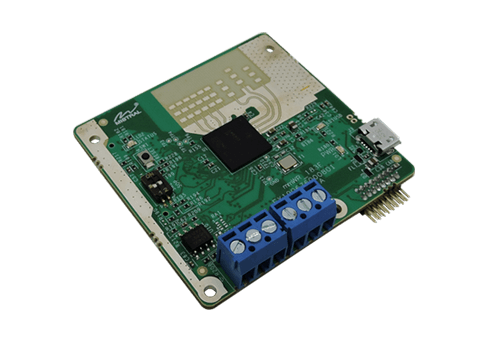
77 GHz Automotive Radar
A 77 GHz automotive radar PCB uses microwave laminate, antenna feeds, controlled impedance, hybrid lamination, and compact power and digital sections. Material-lot control, dimensional inspection, TDR, and VNA or S-parameter measurement help address dielectric variation, copper-profile changes, phase inconsistencies, and RF-to-digital discontinuities. Antenna-region dimensional changes can alter phase balance even when the rest of the board remains electrically continuous. A common misconception is to apply the board's average dielectric-thickness tolerance to the antenna region, where the same variation may be large enough to detune the phase balance between elements. The antenna region should have its own dielectric-thickness, copper-profile, etch-tolerance, phase-matching, and measurement requirements.
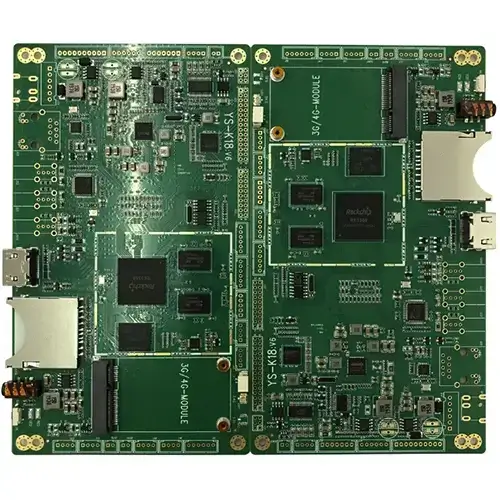
Industrial Control and Power PCB
An industrial control and power PCB must balance high current, electrical isolation, creepage and clearance, thermal loading, and long service life. Heavy copper, copper coins, high-CTI materials, thermal vias, or metal-base structures are verified through copper-section inspection, insulation or hi-pot testing, thermal stress, and electrical testing. Simply increasing copper thickness will not resolve an inefficient current path or insufficient creepage and clearance. The limiting cross-section along the current-carrying path, rather than the average copper weight across the PCB, determines temperature rise. As a result, a narrow neck in the PCB layout can still overheat even when the board has heavy copper overall. The quotation must clearly define the current, allowable temperature rise, voltage and insulation requirements, heat-source location, copper cross-sectional area, attachment method, and thermal test conditions.
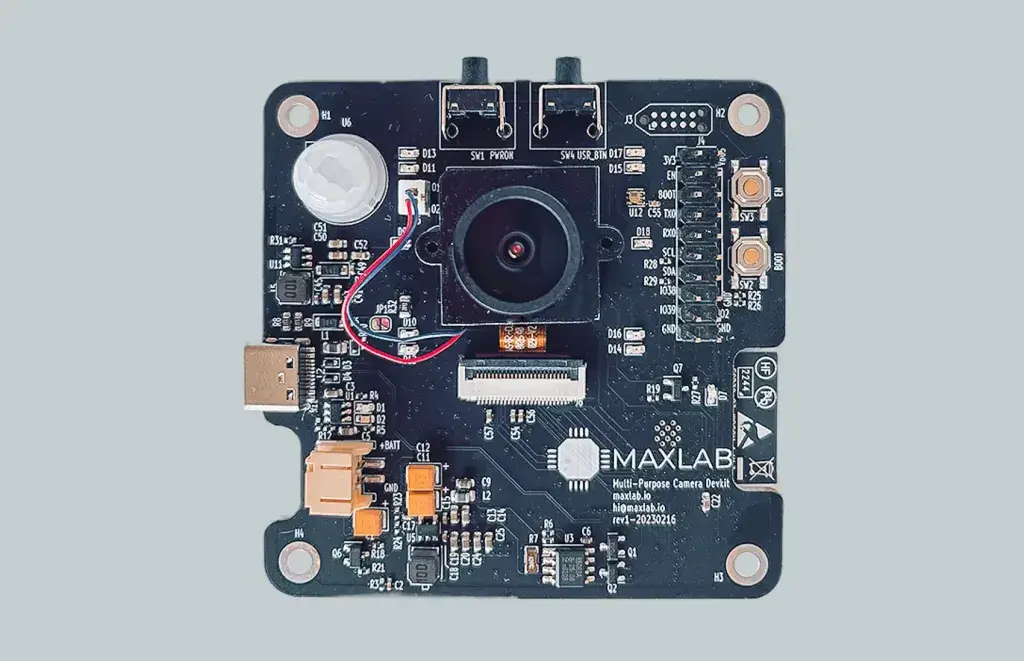
Edge-AI Wireless Gateway
An Edge-AI or Wireless Gateway PCB has limited space, with processors, memory, radios, power-conversion components, and sensors housed on one PCB. Dense construction is achieved with microvias and via-in-pad technologies, while thin dielectric materials support fine-pitch escape. Pad Planarity, Registration, Electrical Testing, and Impedance Control address density, power-noise coupling, and assembly risk. Local Power Integrity must coexist with Dense Escape Routing because compact designs can couple switching noise into sensitive radios. Physically separating RF and switching regions on the PCB does not eliminate noise coupling if their return currents share the same reference plane; this is often overlooked during early stackup reviews. The stackup review must separate High-Speed, RF, and Power-Return requirements and define via-in-pad planarity, impedance targets, Reference-Plane Continuity, and assembly package requirements.
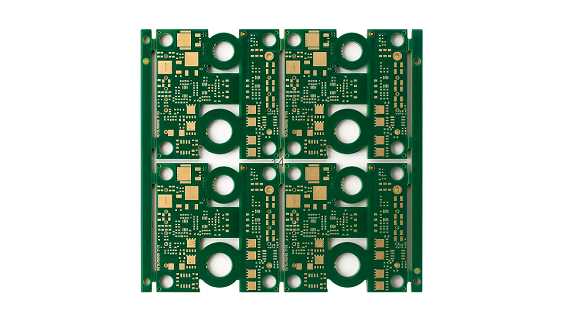
Wide-Bandgap Power Module Substrate
SiC or GaN Power Module Substrates can use AlN DBC or Si₃N₄ AMB to combine electrical insulation, Thick Copper, heat spreading, and power-cycle reliability. Metallization, the copper-to-ceramic interface, partial-discharge behavior, flatness, die attachment, and insulation are important when evaluating the substrate's response to Thermal Cycling and Power Cycling. Power Cycling applies repeated loading to the copper-to-ceramic interface; therefore, interface adhesion and partial-discharge behavior are critical. A substrate that meets room-temperature partial-discharge requirements can degrade after repeated thermal cycling because the CTE mismatch between ceramic and copper gradually weakens the same interface that the partial-discharge test checked only once. The substrate specification must define the ceramic type and thickness, copper thickness, insulation voltage, partial-discharge condition, interface-adhesion requirement, flatness, attachment method, and thermal-cycle profile.
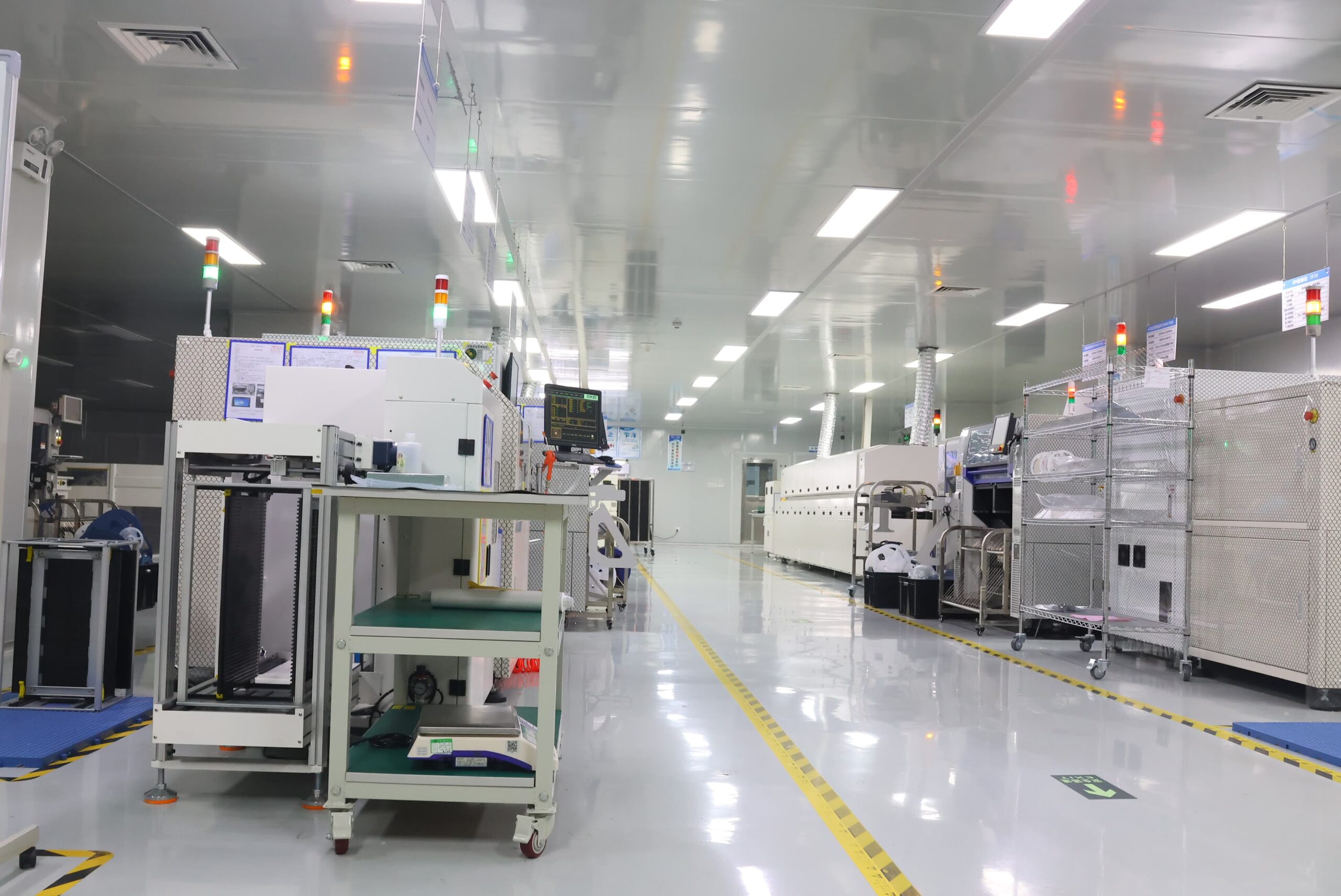
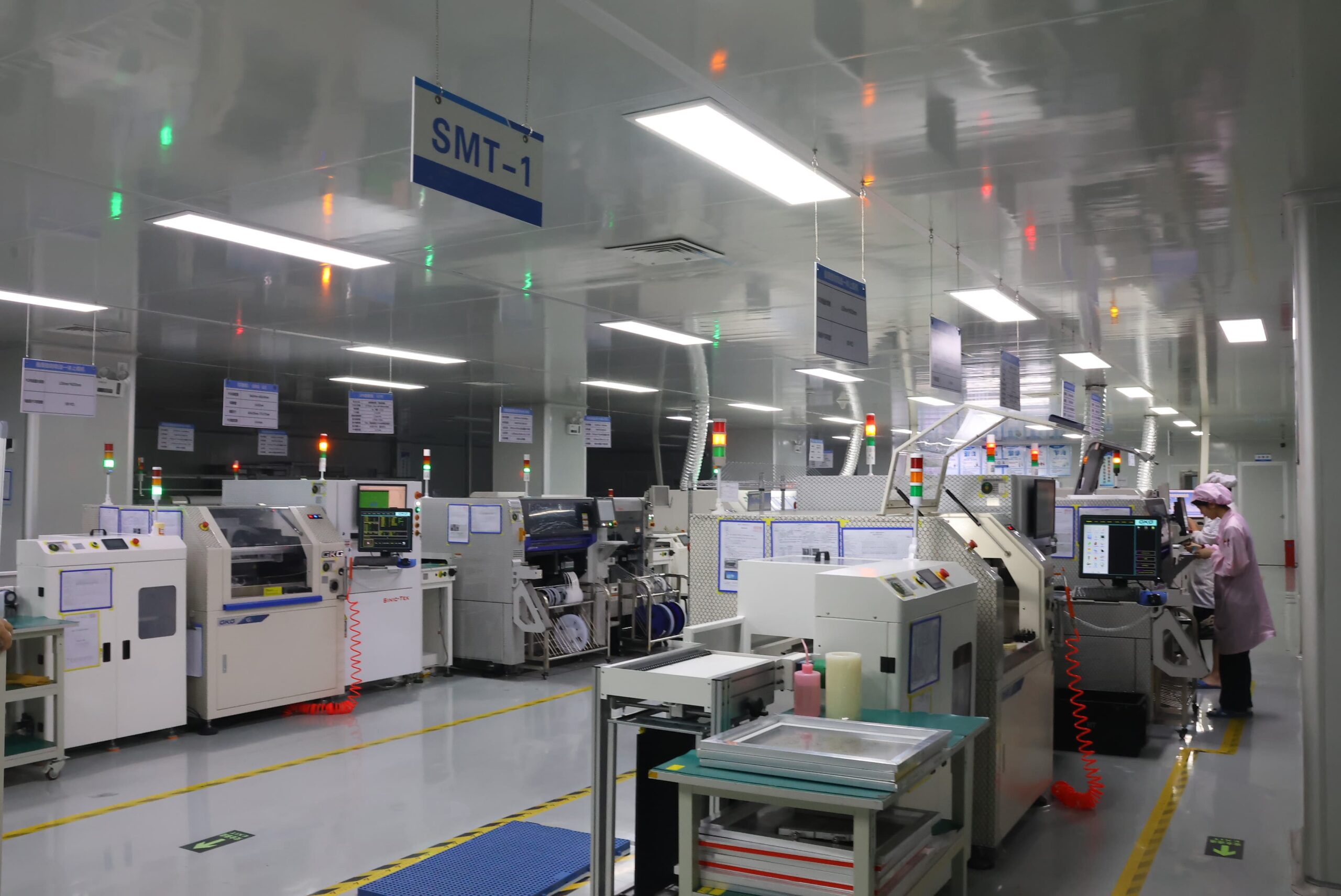
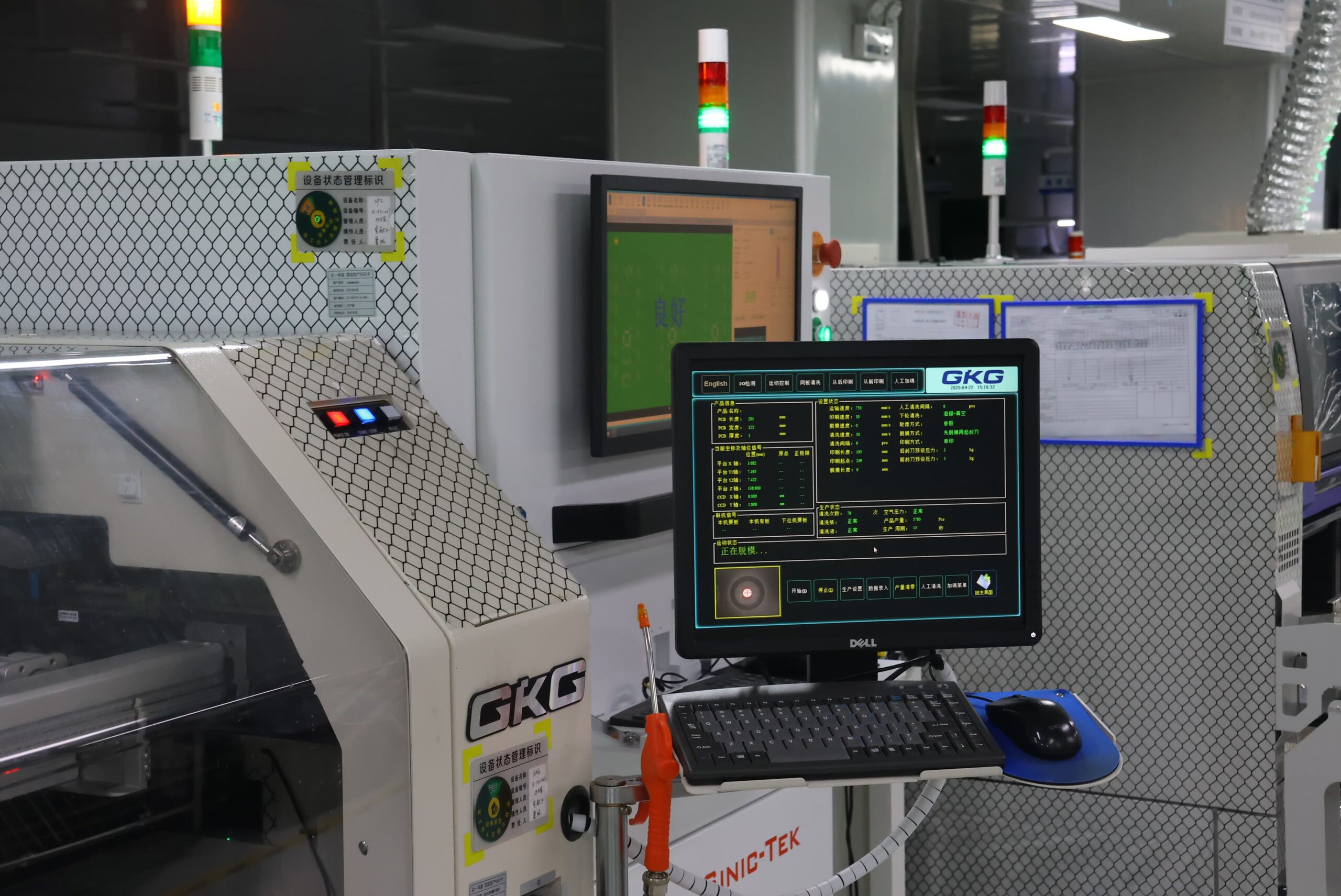
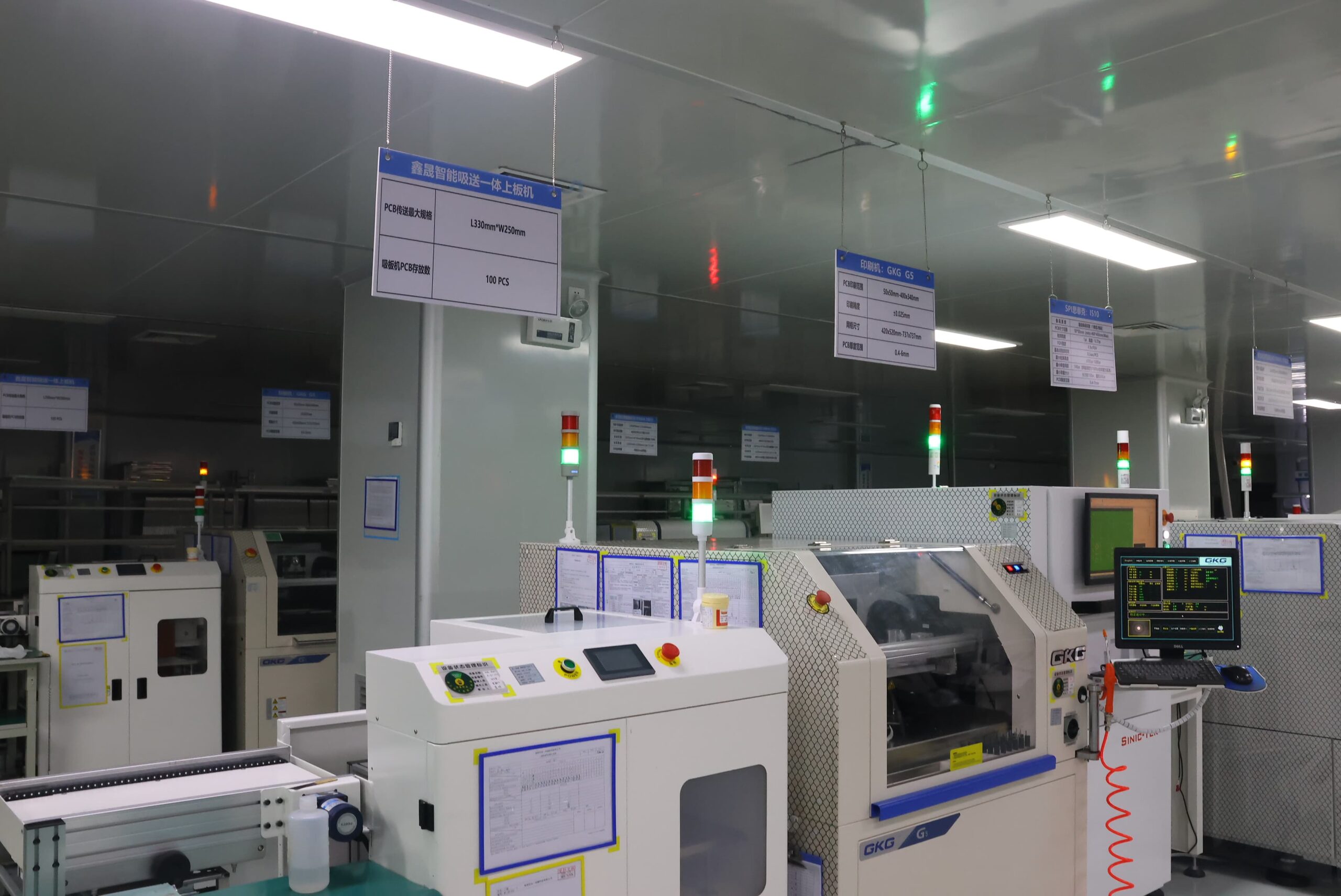
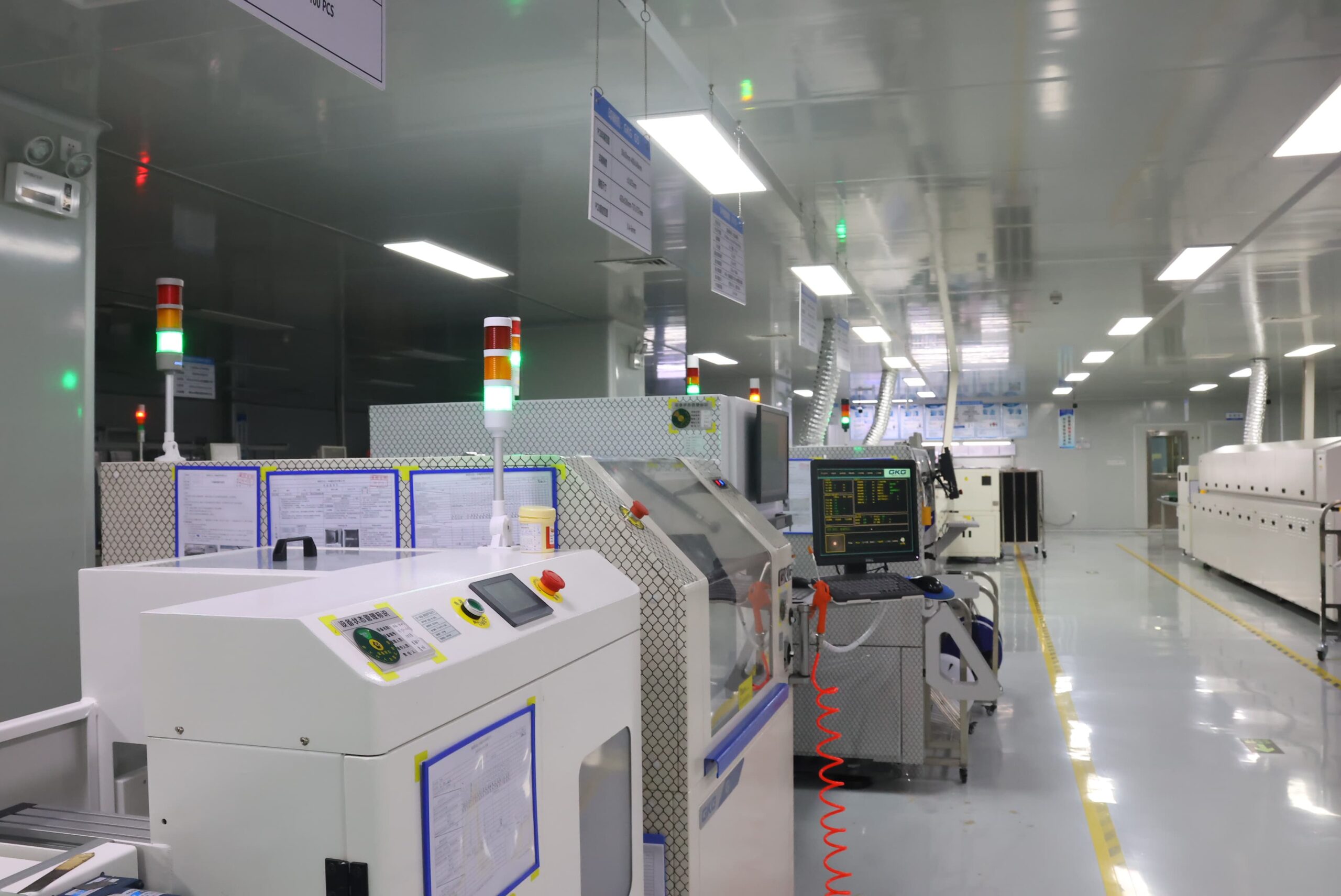
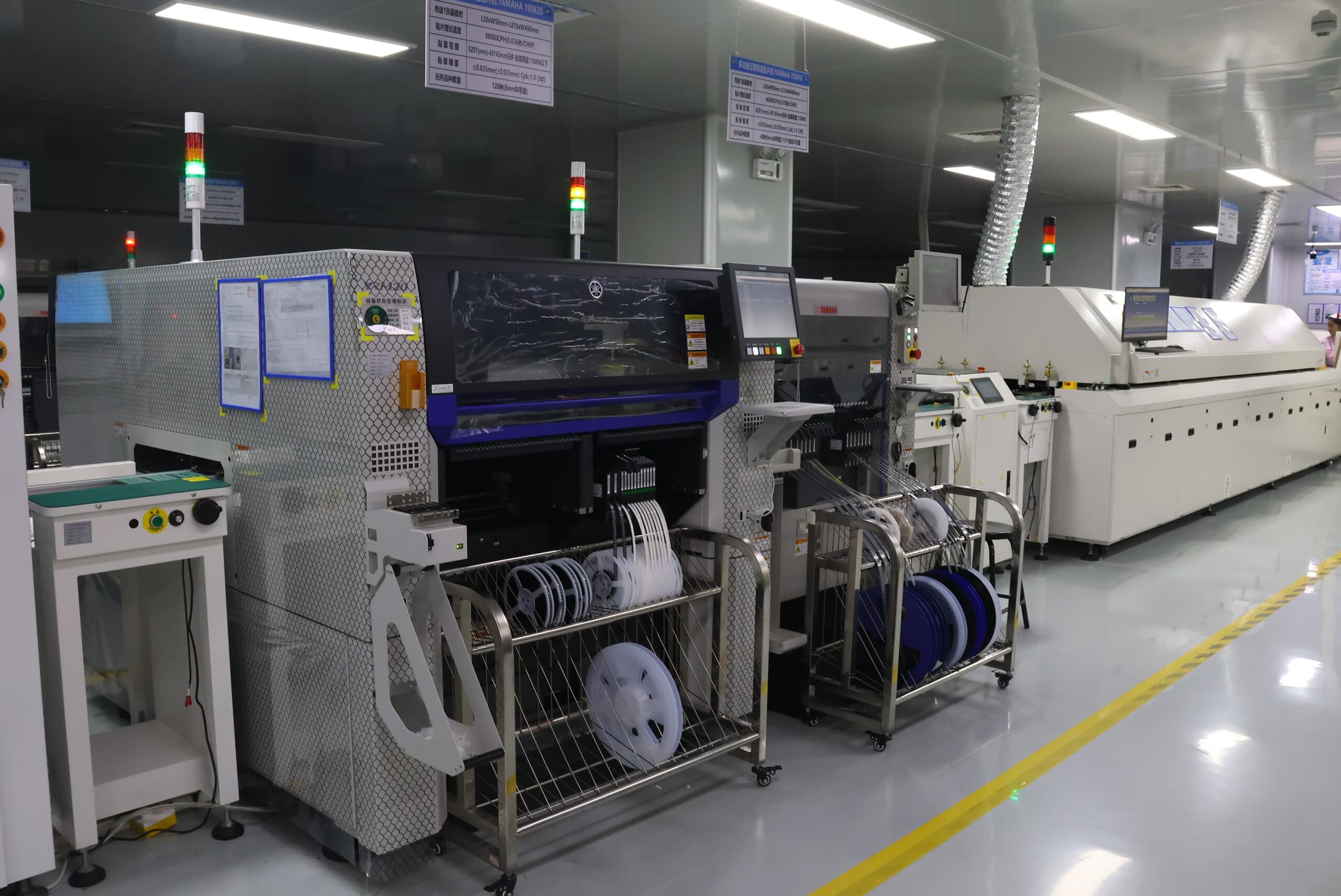
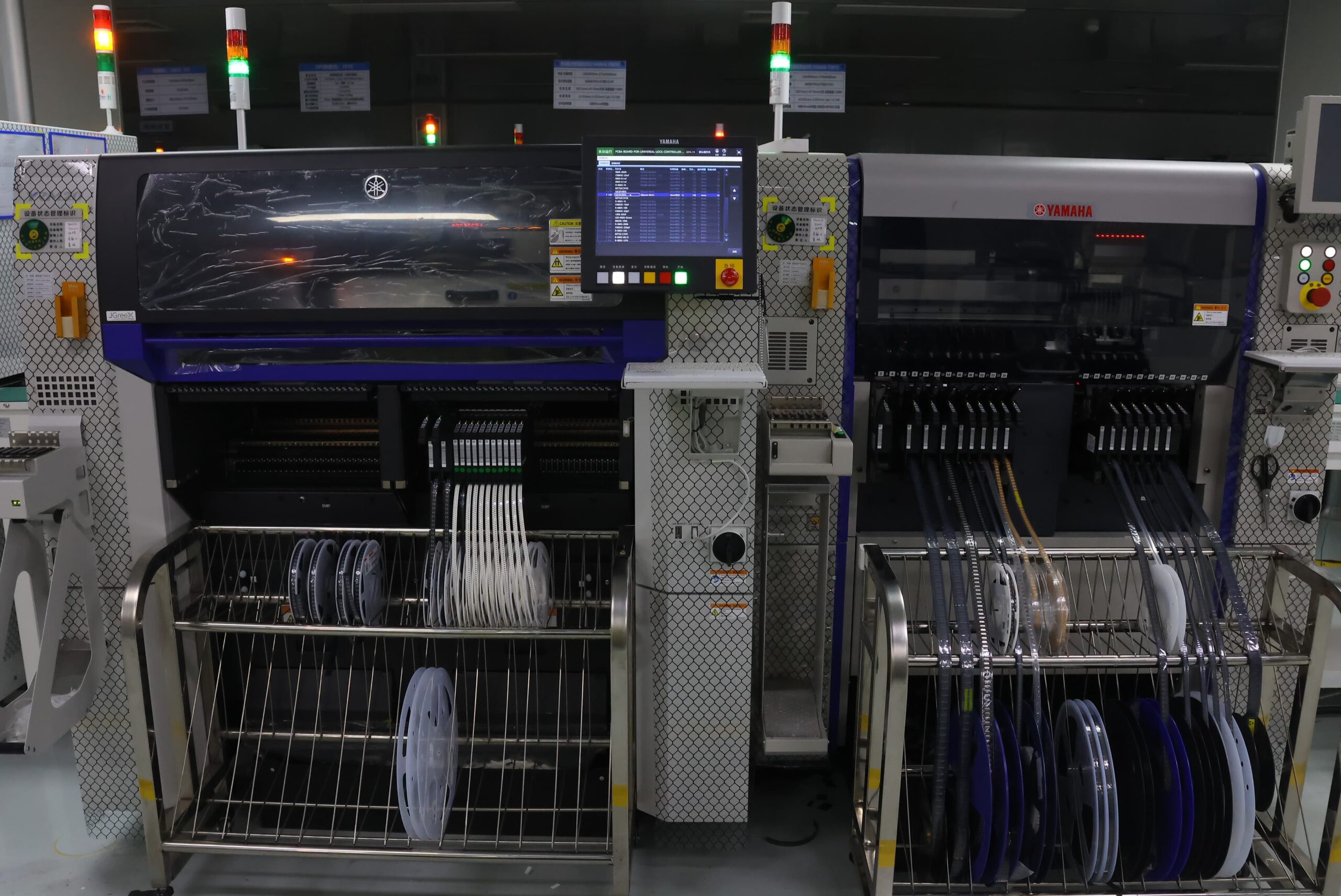
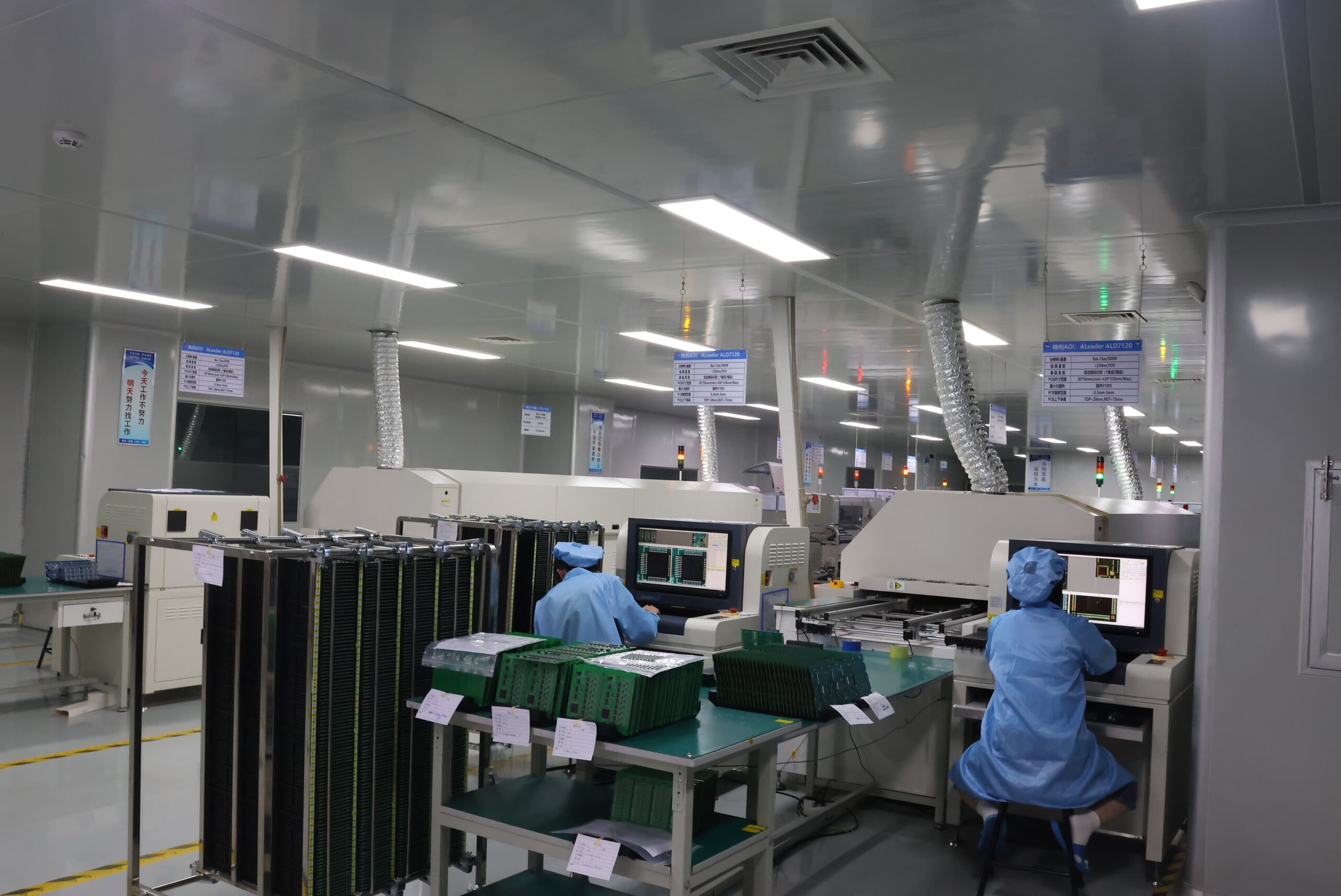
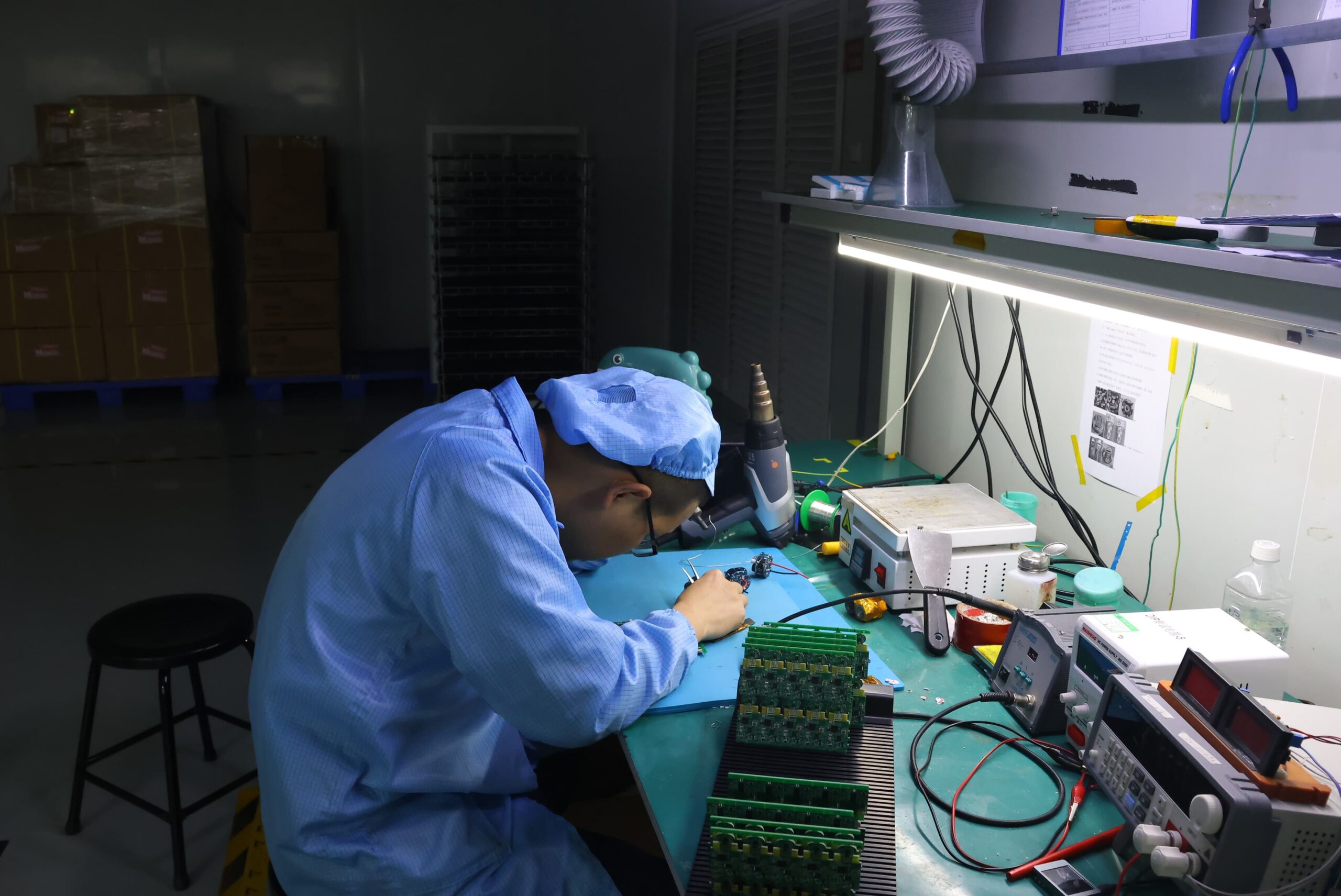
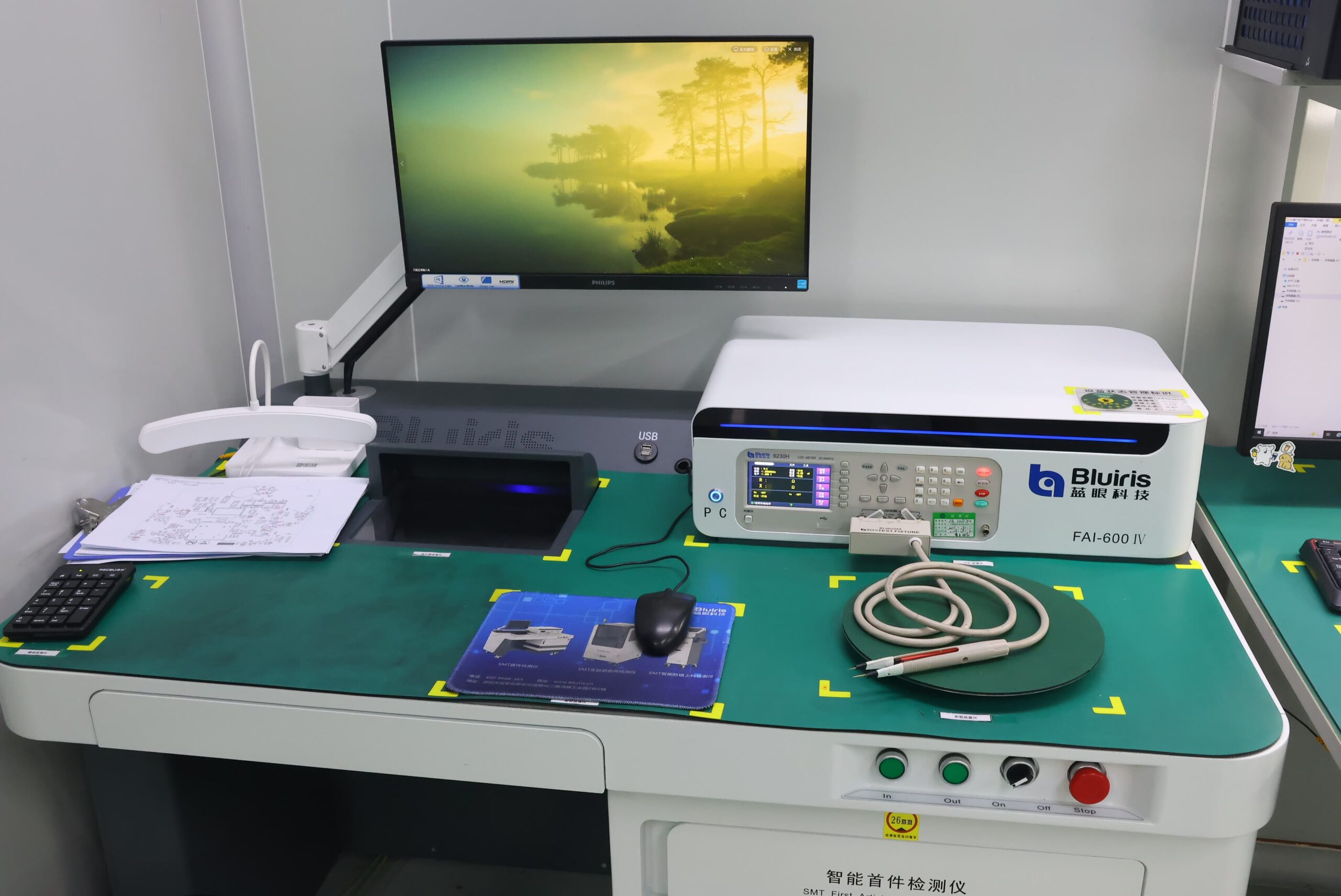
Our PCBA Production Lines
FAQ
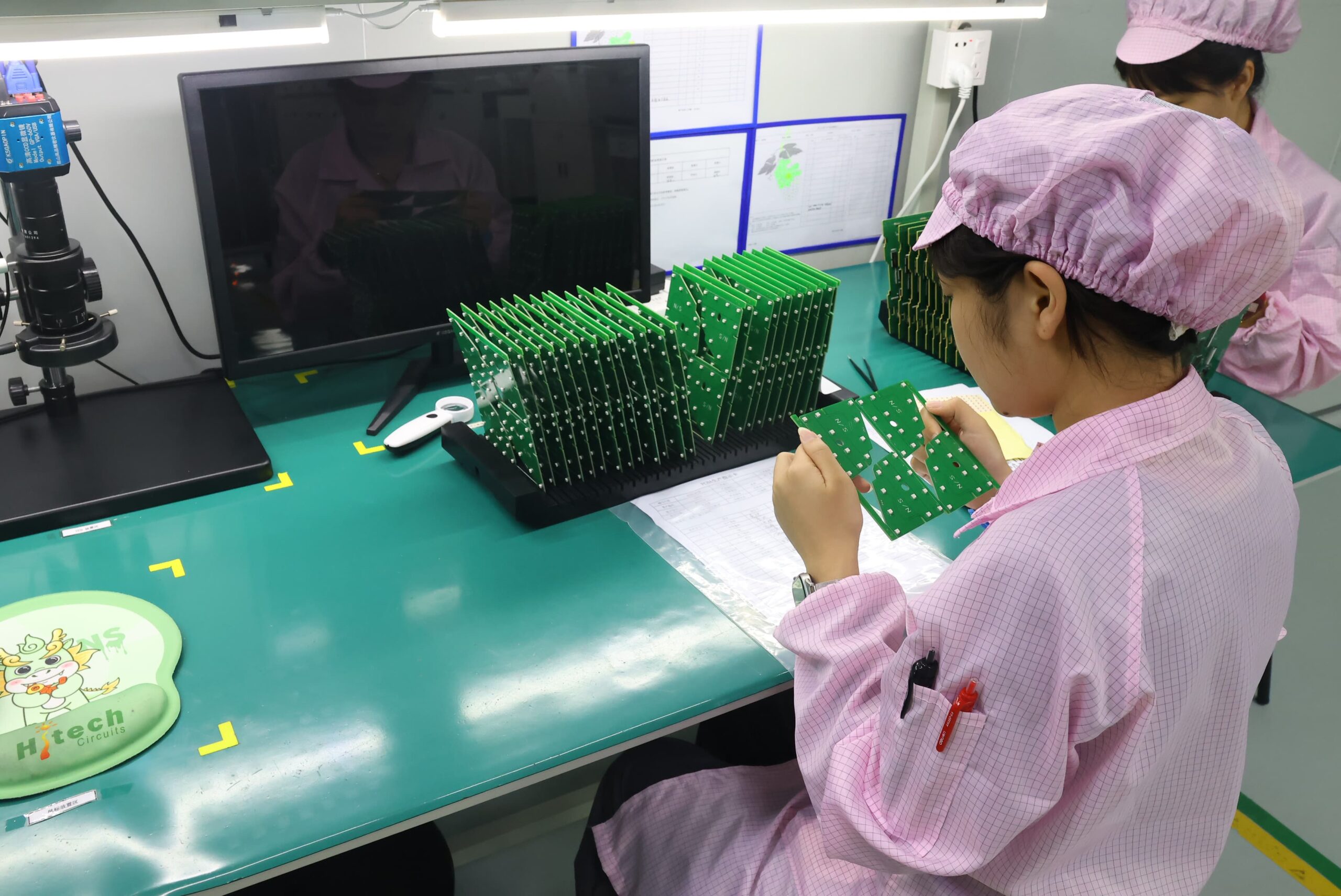
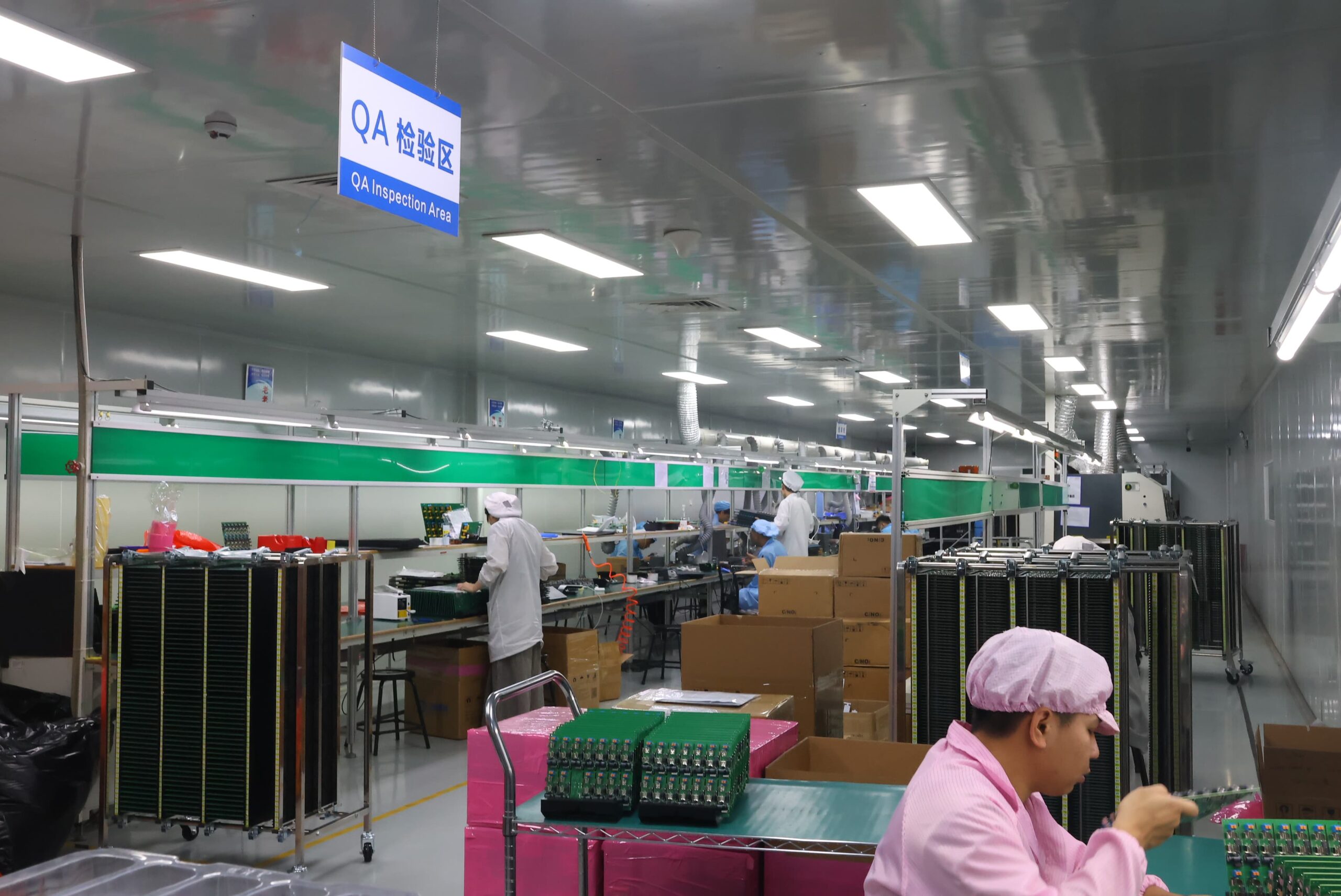
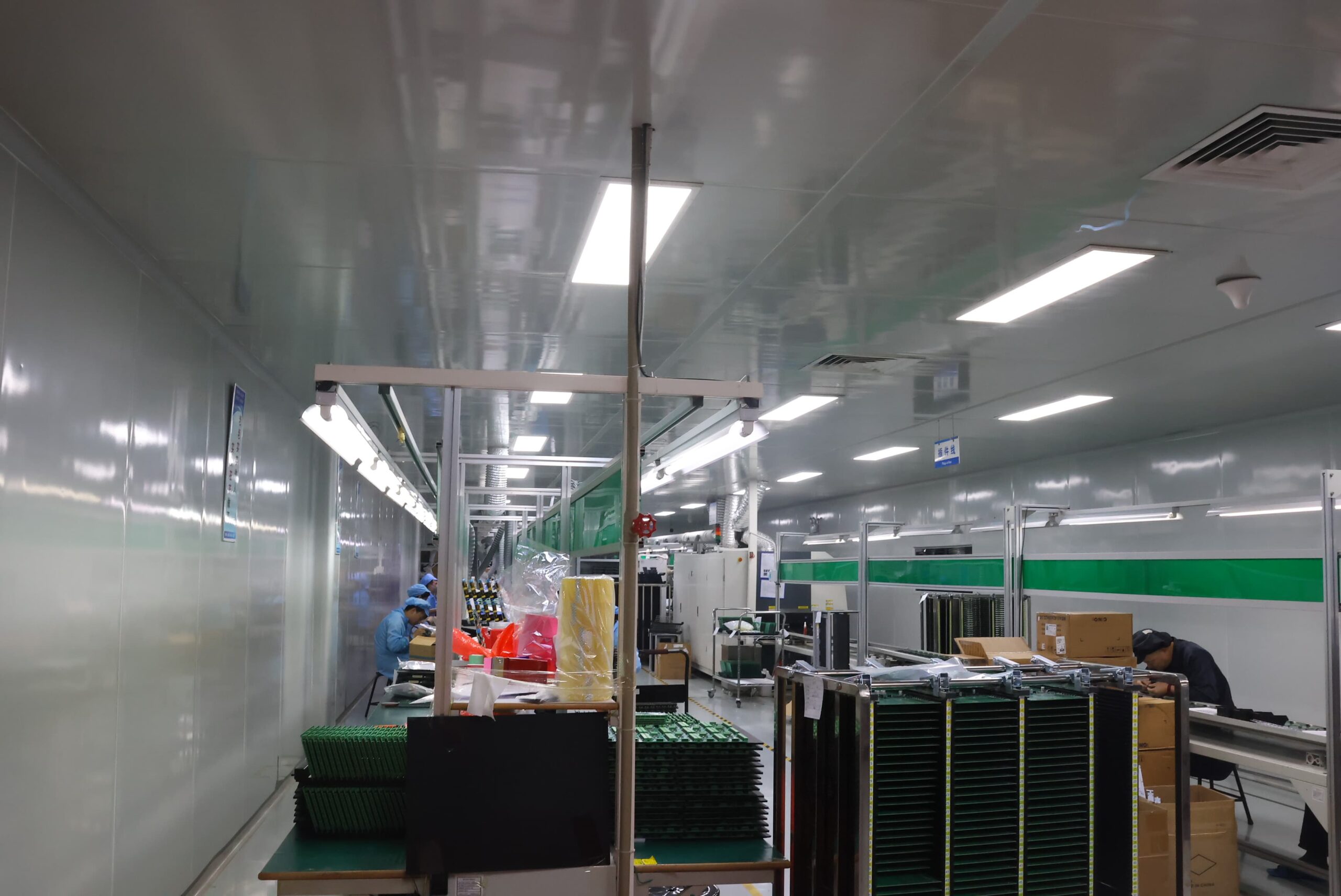
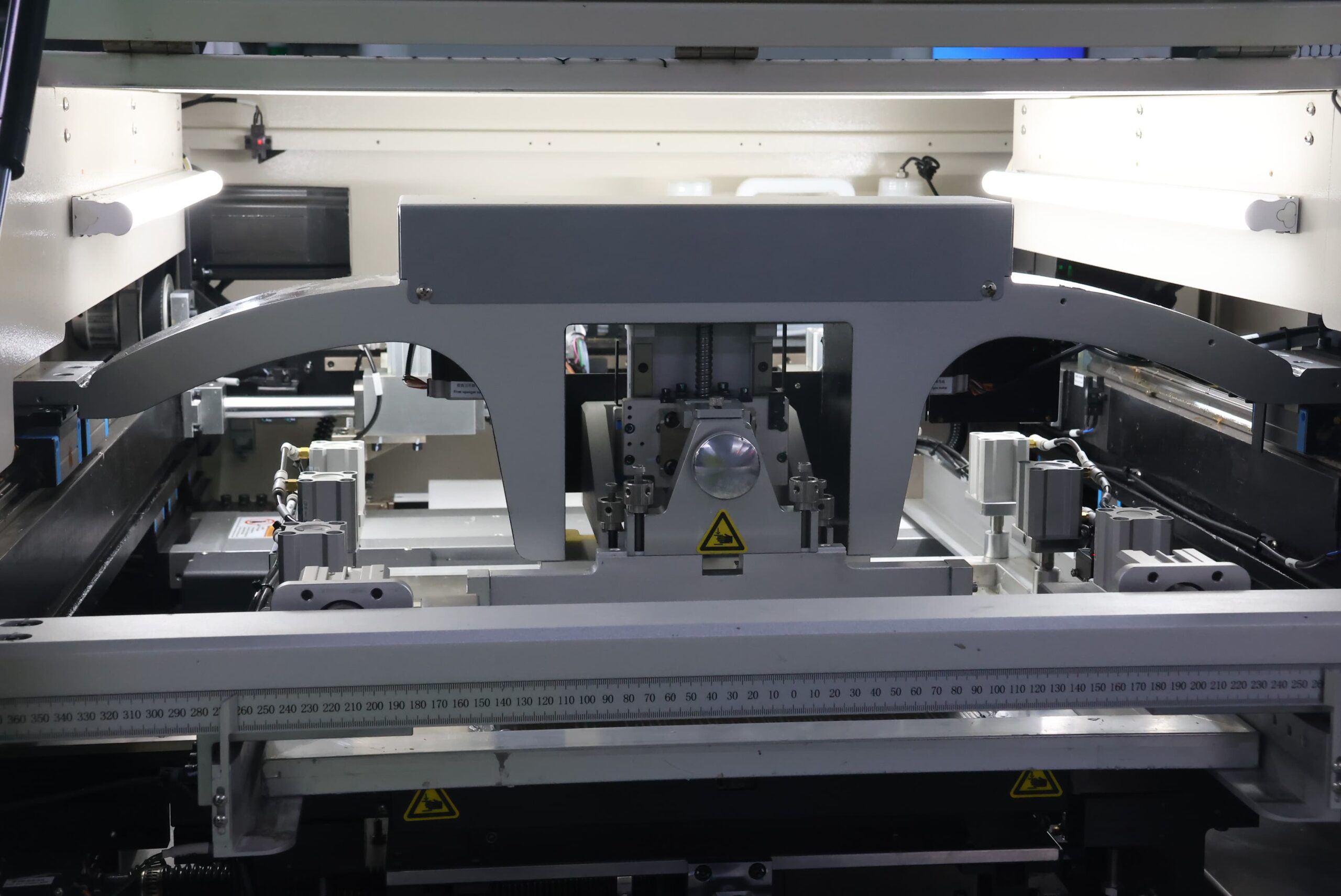
Yes. SUGA can connect advanced PCB fabrication with component sourcing, SMT and THT assembly, SPI, Automated Optical Inspection (AOI), X-ray, In-Circuit Test (ICT), Flying Probe Test (FPT), Functional Test (FCT), and unit traceability. Bare-board fabrication criteria remain associated with the stackup and structure, while finished-assembly acceptance includes data from printing, component placement, solder joints, electrical networks, and functional testing.
Yes. Volume production is supported by DFM feedback, the stackup and material set, first-lot structural and electrical results, repeatable process settings, lot traceability, and production testing. The accepted geometry, materials, verification requirements, and assembly constraints should remain consistent across all volume production lots.
Lead time is controlled by material availability, layer count, sequential lamination, laser drilling and filling, ceramic or hybrid processing, surface finish, inspection depth, and included PCBA work. A realistic lead time estimate should consider the selected stackup construction, material status, required qualification work, report package, and order quantity.
Yes, when the combined stackup creates one manufacturable window. The layer count, copper weights, trace and spacing requirements, drilled-hole size, aspect ratio, board thickness, board area, via structure, and inspection access must work together within the same manufacturing window. Individual capabilities cannot be combined automatically. Each advanced feature must be evaluated against the proposed stackup, copper weights, local minimum geometry, drill pairs, finished board thickness, board area, material family, surface finish, and required test coverage.
The cost of an Advanced PCB is determined by the material family, layer count, build-up and lamination cycles, laser drilling, via filling, fine geometry, Heavy or Embedded Copper, Hybrid or Ceramic processing, testing depth, included PCBA work, and order volume. Two quotations can be compared only when the stackup, material family, via structure, copper, surface finish, inspection and report requirements, PCBA content, and order volume remain consistent.